Is Decaf Coffee Good For You? 11 Health Benefits
Updated - Team Colipse
Decaf coffee is healthy and good for you when consumed in moderation. Decaffeinated coffee delivers antioxidants, supports liver and gut health, reduces inflammation, and avoids caffeine-related issues like anxiety, insomnia, and high blood pressure. Other benefits of decaf coffee are better hydration, less stomach discomfort, and better sleep.
The best decaf coffee for health benefits is freshly roasted Swiss Water® Process decaf from specialty coffee brands. Swiss Water® Process decaf often retains antioxidant levels comparable to regular coffee. Decaf and regular coffee offer similar health benefits, with decaf being better for caffeine-sensitive individuals. A gradual transition from regular to decaf coffee minimizes withdrawal symptoms.
Is Decaf Coffee Good For You?
Yes, decaf coffee is good for you due to its antioxidants, low caffeine, and health-supporting compounds like chlorogenic acid, polyphenols, and melanoidins. These compounds remain after caffeine is removed and help neutralize free radicals, reduce inflammation, and support overall cellular health.
According to a 2021 study by Raffaella Colombo and Adele Papetti titled "Decaffeinated coffee and its benefits on health: focus on systemic disorders," decaf coffee is associated with improved liver function, reduced stomach irritation, better gut health, lower inflammation, and more stable eye pressure. The authors reviewed 20 years of decaffeinated coffee research, focusing on phenolic and non-caffeine compounds.

Drinking decaf coffee daily may reduce the risk of all-cause mortality by 13%, similar to regular coffee. This conclusion comes from a 2019 meta-analysis published in the Journal of Human Nutrition and Dietetics, which reviewed data from over 10 million participants across 21 cohort studies. Decaf coffee enables relaxation by avoiding stimulation of the central nervous system.
Drinking decaf coffee in moderation is beneficial for people who are sensitive to caffeine, especially in the evening, at night, or during pregnancy. People who benefit from decaf include those with high blood pressure, diabetes, or anxiety. Decaffeinated coffee delivers familiar coffee flavor and aroma while avoiding the stimulating effects associated with caffeine. This low caffeine option supports dietary restrictions that limit stimulant intake.
What are the Health Benefits of Drinking Decaf Coffee?
Health benefits associated with decaf coffee describe the advantage of drinking coffee with minimal caffeine. The eleven main health benefits of drinking decaf coffee are listed and explained below.
- Decaffeinated coffee supports hydration without a diuretic effect.
- Heart health may improve with habitual decaf consumption.
- Decaf coffee may help manage blood pressure.
- Type 2 diabetes risk may decrease with decaffeinated coffee.
- Decaffeinated coffee supports liver function.
- Decaf coffee eases stomach discomfort.
- Gut health improves with drinking decaf coffee.
- Decaffeinated coffee supports weight management.
- Sleep quality improves with decaf coffee.
- Decaf coffee lowers eye pressure.
- Decaf coffee may improve mood.
1. Decaffeinated coffee supports hydration without a diuretic effect
Hydration describes the body’s capacity to absorb and retain fluids efficiently. Decaffeinated coffee improves fluid balance by reducing caffeine intake. Lower caffeine levels reduce the drink’s diuretic effect on the body. As a result, decaf coffee supports overall fluid intake without promoting dehydration.
There are no major hydration studies comparing decaf coffee to water. Most research compares caffeinated coffee to water, not decaf. For example, a 2014 study by Sophie C Killer and colleagues from University of Birmingham investigated whether moderate coffee consumption causes dehydration in 50 habitual male coffee drinkers consuming 3–6 cups per day. Researchers found no significant differences in hydration, total body water, or 24-hour urine volume between coffee and water intake. This suggests that if regular coffee does not dehydrate, decaf coffee is even safer for hydration.

Decaf coffee is as good as water for hydration, according to a 2003 study by Maughan and Griffin published in the Journal of Human Nutrition and Dietetics. The analysis finds that caffeine amounts typical of normal servings of decaf coffee, tea, or soft drinks do not produce a meaningful diuretic effect or impair overall hydration under real-world conditions. In contrast, the authors concluded that high acute caffeine intakes of approximately 250–300 mg can temporarily increase urine output.
2. Heart health may improve with habitual decaf consumption
Heart health describes how well the cardiovascular system functions, including blood pressure regulation, cholesterol balance, and arterial performance. Decaf coffee may support heart health by reducing blood pressure and improving vascular function without the stimulating effects of caffeine.
A 2009 study by Silvio Buscemi, published in the European Journal of Clinical Nutrition, examined how decaffeinated coffee impacts blood vessel function in 15 healthy adults. Participants drank one cup and two cups of decaffeinated Italian espresso in random order, with 5–7 days between test sessions. The study found that increasing decaf coffee intake improved endothelial function by enhancing blood vessel dilation without raising heart rate or blood pressure.

The effects of drinking decaf coffee on cardiovascular health were examined in a a 1985 study titled "The cardiovascular effects of regular and decaffeinated coffee" in 12 healthy adults. Researchers measured changes in blood pressure, heart rate, and vascular response after drinking two cups of either regular or decaffeinated coffee. Regular coffee raised blood pressure, while decaf stayed safe for most heart health measures. Decaf did not change heart rate or blood flow, proving caffeine is the part that affects the heart most.
3. Decaf coffee may help manage blood pressure
High blood pressure is a chronic condition where blood pressure in the arteries remains elevated, increasing heart strain. Decaf coffee may benefit people with high blood pressure by reducing caffeine intake, which can raise blood pressure. A 1989 study by M van Dusseldorp from the Department of Medicine at University of Nijmegen found that replacing regular coffee with decaf lowered blood pressure in 45 habitual coffee drinkers aged 25–45 years who typically consumed four to six cups of coffee per day.
Researchers tracked systolic and diastolic blood pressure as participants switched from caffeinated coffee (approximately 445 mg of caffeine per day) to decaffeinated coffee (about 40 mg per day) during the study. The study observed a consistent drop in blood pressure when participants replaced regular coffee with decaf. The change happened without other lifestyle or diet changes, identifying caffeine as the key cause of coffee-related blood pressure increases.

Drinking decaffeinated coffee was linked to better blood pressure results in a large population study on nearly 30,000 postmenopausal women. Researchers at Stanford University School of Medicine tracked decaf and regular coffee consumption and measured changes in systolic and diastolic blood pressure over time. Decaffeinated coffee reduced diastolic pressure without affecting systolic pressure. Neither decaffeinated nor regular coffee increased hypertension risk during follow-up.
The following table shows how decaffeinated coffee affects blood pressure, heart rate, and heart health compared to regular coffee in medical trials and lab studies.
| Study Title | Key Finding on Decaffeinated Coffee and Blood Pressure |
|---|---|
| Effect of decaffeinated versus regular coffee on blood pressure. A 12-week, double-blind trial (van Dusseldorp et al., 1989) | Switching to decaffeinated coffee led to a small but significant decrease in systolic (-1.5 mm Hg) and diastolic (-1.0 mm Hg) blood pressure in normotensive adults. |
| The cardiovascular effects of regular and decaffeinated coffee (Smits et al., 1985) | Decaffeinated coffee induced a smaller increase in diastolic blood pressure compared to regular coffee; overall cardiovascular effects mainly due to caffeine. |
| Acute effect of decaffeinated coffee on heart rate, blood pressure, and exercise performance in healthy subjects (Jee et al., 1988) | No changes in heart rate, blood pressure, or exercise performance after drinking decaffeinated coffee. |
| Coffee acutely increases sympathetic nerve activity and blood pressure independently of caffeine content (Corti et al., 2002) | Decaffeinated coffee increased blood pressure and sympathetic activity in non-habitual drinkers, similar to caffeinated coffee. |
| Effect of Caffeinated and Decaffeinated Coffee on Blood Pressure and Heart Rate of Healthy Individuals (Alhabeeb et al., 2022) | No significant differences in blood pressure or heart rate after consuming decaffeinated versus caffeinated coffee. |
| Evaluation of differences in cardiovascular and metabolic effects of chronic caffeinated and decaffeinated coffee intake (2024 animal study) | Decaffeinated coffee preserved vascular function better than caffeinated; no blood pressure elevation with decaf. |
| Acute Effect of Decaffeinated Coffee on Heart Rate, Blood Pressure, and Exercise Performance (additional reference, 1988) | No discernible acute adverse cardiovascular effects from decaffeinated coffee. |
4. Type 2 diabetes risk may decrease with decaffeinated coffee
Type 2 Diabetes is a chronic condition where the body resists insulin or does not make enough. This leads to high blood sugar levels. Decaf coffee may help reduce the risk of Type 2 Diabetes by improving insulin sensitivity and lowering blood sugar levels without caffeine interference.
The effects of decaf coffee on insulin sensitivity were evaluated in a 2018 randomized controlled crossover trial by Caio E G Reis in 17 healthy adult men aged 20–35. Each participant consumed 2.5 cups of decaffeinated coffee, regular coffee, regular coffee with sugar, or water with or without sugar across the trial conditions. The findings indicate that decaf coffee acutely improves insulin sensitivity in healthy men without altering incretin hormone responses in the short term.

The 2011 study by Loopstra-Masters and colleagues from the Department of Nutritional Sciences at University of Toronto assessed associations between caffeinated and decaffeinated coffee intake and metabolic outcomes related to glucose regulation in 954 multi-ethnic, non-diabetic adults. Decaffeinated coffee lowered 2-hour postload glucose levels and increases acute insulin response.
5. Decaffeinated coffee supports liver function
Better liver health is one of the main benefits of drinking decaf coffee. Studies show that drinking decaf may reduce liver enzyme levels, lower the risk of liver cirrhosis, and support overall liver function. Researchers from National Cancer Institute analyzed NHANES 1999–2010 data to assess links between coffee consumption and liver enzyme levels in 27,793 U.S. adults aged 20 and older. Decaffeinated coffee drinkers consuming at least two cups per day demonstrated reduced odds of elevated ALT levels.

The UK Biobank cohort analysis found that decaffeinated coffee consumption was associated with a lower risk of chronic liver disease compared with no coffee intake. This large prospective study followed 494,585 adults and observed reduced incidence of liver-related outcomes among decaf coffee drinkers. Regularly drinking decaf coffee was linked to a lower risk of long-term liver disease or fatty liver over time.
6. Decaf coffee eases stomach discomfort
Stomach discomfort refers to irritation caused by coffee acids and compounds that can upset the stomach lining. Decaf coffee reduces these compounds, making it easier on the digestive system and less likely to trigger acid reflux or stomach pain.
A 1997 study led by Christian Pehl conducted a randomized, double-blind clinical trial examining how coffee decaffeination affects gastro-oesophageal reflux. The clinical study enrolled 17 patients with reflux disease and required each to complete two 3-hour post-meal pH tests. The trial protocol assigned participants to drink 300 ml of either regular or decaffeinated coffee with a standardized breakfast. Regular coffee raised the time oesophageal pH stayed below 4 to 17.9%, while decaffeinated coffee lowered it to 3.1%. The authors concluded that removing caffeine from coffee reduces reflux symptoms in patients with reflux disease under controlled conditions.

The benefits of drinking decaf coffee for stomach health were confirmed in a 1994 study by Wendl et al., showing decaffeination reduces gastro-oesophageal reflux in 16 healthy adult volunteers. Study participants consumed 300 ml of standardized beverages with a controlled breakfast across multiple test conditions. The experimental design compared coffee types and water in sixteen subjects, while subgroups evaluated tea, adjusted coffee, and caffeine variations in water. Removal of caffeine from coffee significantly reduced its reflux-inducing effect relative to regular coffee.
7. Gut health improves with drinking decaf coffee
Gut health describes improved digestion, reduced acidity, and a more balanced gut microbiome. Decaf coffee contains antioxidants and compounds like polyphenols that support beneficial gut bacteria while reducing irritation caused by regular coffee’s caffeine.
A 2024 study by Paolo Manghi and colleagues from University of Trento linked coffee consumption to higher levels of the gut bacterium Lawsonibacter asaccharolyticus. The research team analyzed data from 22,867 U.S. and U.K. participants and integrated it with datasets from 211 other cohorts totaling 54,198 people. The authors reported that L. asaccharolyticus was consistently linked to both regular and decaffeinated coffee, showing caffeine alone did not explain the association.

However, besides a handful of studies, evidence on how decaf coffee affects gut bacteria remains limited because most research does not separate decaf from regular coffee. A 2024 study by Saygili, Hegde, and Shi published in Nutrients shows that coffee helps the gut move and increases healthy Bifidobacterium. Even without caffeine, coffee supports bowel function and helps maintain a diverse range of gut microbes as long as it is enjoyed in moderation.
8. Decaffeinated coffee supports weight management
Weight management describes the role decaffeinated coffee may play in appetite regulation and calorie control. Decaf coffee may reduce hunger signals by limiting the stimulation of appetite-related hormones. The absence of caffeine removes appetite-stimulating effects linked to increased food intake.
The researchers Greenberg and Geliebter from Brooklyn College of the City University of New York conducted a 2012 placebo-controlled, single-blinded, randomized four-way crossover trial published in the Journal of the American College of Nutrition. The clinical study tested 11 healthy men, average age 23.5 and BMI 23.6, who consumed caffeine in water, caffeinated coffee, decaffeinated coffee, or plain water during separate lab visits. Decaffeinated coffee significantly reduced self-reported hunger compared with placebo across the full 180-minute window.
The evidence evaluating decaf coffee's weight loss benefits was examined in a 2021 systematic review by Ramli, Alkhaldy, and Mhd Jalil from Faculty of Health Sciences at Universiti Sultan Zainal Abidin published in Medicina (Kaunas). The combined study included 821 participants. Individual trials ranged from 10 to 142 subjects. Decaffeinated coffee interventions used daily doses of 180–400 ml. The authors showed that decaffeinated coffee may support weight loss by lowering fasting blood glucose.
9. Sleep quality improves with decaf coffee
Decaf coffee protects sleep quality because it contains very little caffeine, which prevents over-stimulation of the nervous system. This relaxes the body and preserves melatonin levels to support natural sleep without caffeine disruption.
The 2002 study by Lotan Shilo titled "The effects of coffee consumption on sleep and melatonin secretion" evaluated the effects of coffee intake on sleep quality and melatonin secretion in healthy adults. The study enrolled six adults, aged around 32, to compare effects of 130 mg caffeinated and decaffeinated coffee using a double-blind crossover spaced one week apart. The researchers measured total sleep time, sleep efficiency, and sleep onset latency after coffee consumption. While regular caffeinated coffee reduced total sleep time and worsened sleep quality, decaffeinated coffee allowed these sleep parameters to remain at optimal levels.

The 2017 randomized double-blind trial by Brian Distelberg published in Journal of Caffeine Research examined how caffeinated versus decaffeinated coffee affected mood, sleep, and quality of life in 49 healthy adults aged 18 to 45. Findings from the caffeinated coffee condition showed lower sleep quality and higher anxiety and stress scores compared to baseline over a 5-day period. Outcomes observed in the decaffeinated coffee condition revealed that sleep and well-being remained stable and undisturbed.
10. Decaf coffee lowers eye pressure
Eye pressure refers to intraocular pressure (IOP), which is the fluid pressure inside the eye. Decaf coffee may benefit people sensitive to caffeine by helping maintain stable eye pressure levels. Unlike regular coffee, decaf does not significantly increase IOP, making it a safer option for individuals at risk of glaucoma.
A 2002 study titled “Effect of coffee consumption on intraocular pressure” published in Annals of Pharmacotherapy compared 180 mg caffeinated coffee to 3.6 mg decaffeinated coffee, both served in 200 ml, to evaluate effects on intraocular pressure. The clinical sample included 28 participants: 6 with normotensive glaucoma and 22 with ocular hypertension. The authors concluded that decaf coffee produced a statistically significant reduction in IOP.
Also, a 2013 study published in the International Journal of Research and Reviews in Pharmacy and Applied Science tested how decaf coffee affects eye health. The study followed 103 young adults who drank 1 cup of decaffeinated coffee made with 3.6 g of coffee in 200 ml water before being tested. The researchers concluded that decaf coffee lowered eye pressure and suggested it as a good option for young people managing their eye health.
11. Decaf coffee may improve mood
Decaf coffee can improve mood through its high antioxidant content, specifically chlorogenic acid. This compound helps reduce brain inflammation and supports mental well-being. Unlike regular coffee, decaf provides these benefits without the jitteriness or anxiety often caused by caffeine.
A 2012 study by Vanessa Cropley in Psychopharmacology examined how decaf enriched with chlorogenic acid affects mood in older adults. While caffeinated coffee had the strongest effect, researchers found that decaf high in chlorogenic acid still provided noticeable mood and behavioral improvements. This suggests that other coffee compounds, not just the caffeine, contribute to feeling better.

Further research by Ryuji Ochiai published in the Journal of Alzheimer’s Disease in 2019 indicates that chlorogenic acids in decaffeinated coffee support mental clarity in older adults. The study links these compounds to improved cognitive focus during everyday activities. Decaf coffee consumption reduces task-related errors in older individuals. This cognitive support helps maintain a more positive and less frustrated mental state throughout the day.
What is the Best Decaf Coffee for Health Benefits?
The best decaf coffee for health benefits is freshly roasted Swiss Water® Process decaf from specialty coffee brands. Freshly roasted decaffeinated coffee improves health by keeping bioactive compounds like chlorogenic acids, antioxidants, and polyphenols. These compounds help with anti-inflammatory, heart, metabolic, and anti-cancer functions, while less processing prevents harmful breakdown.
Swiss Water® Process is a patented, solvent-free way to decaffeinate coffee. Swiss Water® decaf uses only water and carbon filters to remove 99.9% of caffeine without chemicals, saving antioxidants and nutrients. Other decaffeination methods use chemical solvents to catch and remove caffeine. Solvent-based ways may leave small residues, even when approved by food authorities. Long-term contact with these residues causes concerns for sensitive people.
What is the Healthiest Decaf Coffee to Buy?
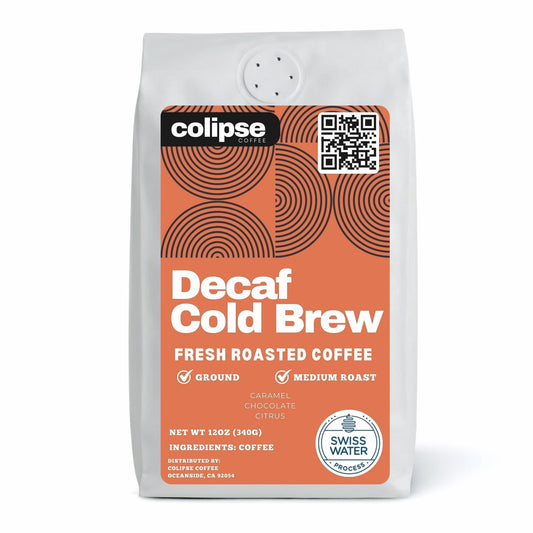
Colipse Coffee offers the healthiest decaf coffee using the Swiss Water® Process, which removes caffeine without methylene chloride. At Colipse Coffee, our decaf is ideal for people with caffeine sensitivity, pregnancy, or digestive issues, delivering clean flavor with no toxins, no chemicals, and no compromises. Our healthy decaf coffee starts at $21.95 per 12 oz bag, with larger sizes and bulk options offering savings up to 40%. Our pricing varies by blend and size, including whole bean, ground, and K-cups formats.
Is Decaf Coffee Healthier than Regular Coffee?
Decaf coffee is not inherently healthier than regular coffee. Both provide similar antioxidant benefits and help reduce the risk of diseases like Type 2 diabetes and heart disease. Decaf is healthier for people sensitive to caffeine, while regular coffee offers stronger cognitive stimulation due to its caffeine content. When deciding between decaf versus regular coffee, the choice depends on specific health situations.
Can You Switch from Regular to Decaf Coffee without Side Effects?
Yes, you can switch from regular to decaf coffee, but doing it gradually helps prevent caffeine withdrawal symptoms. Common side effects include headaches, fatigue, irritability, and difficulty concentrating. These symptoms usually last 2 to 7 days. Taper caffeine intake by mixing decaf with regular coffee to ease the transition.
How Much Decaf Coffee is Too Much?
Drinking more than 4 cups of decaf coffee per day may be too much for most people. Even though decaf is lower in caffeine, having too many cups can still cause trouble with sleep, stomach issues, and how your body takes in minerals. People with heart problems or those who are pregnant should talk to a doctor first.
Too much decaf can lead to side effects like heartburn or feeling anxious if you are sensitive to caffeine. Some brands use chemicals to remove caffeine, so choosing "water-processed" coffee is a healthier choice. To avoid side effects of decaf coffee, try to limit yourself to 1 to 3 cups per day to avoid these risks.
Does Decaf Coffee Help You Poop?
Yes, decaf coffee can help you poop. It contains compounds like chlorogenic acid and polyphenols that stimulate colon contractions. The warmth of the drink, combined with the gastrocolic reflex, helps explain why coffee and poop are often linked, as this reflex stimulates colon contractions and can trigger bowel movements shortly after drinking coffee. While it's milder than regular coffee, decaf still has a noticeable laxative effect.
Is Decaf Coffee Safe for Kids?
Yes, decaf coffee is generally safe for older children in small amounts because it contains very low caffeine (2–15 mg per cup), but it should not replace water or milk. Pediatricians from the American Academy of Pediatrics (AAP) recommend no caffeine for children under 12, and even decaf should be avoided in toddlers due to sensitive nervous systems.