
Best Swiss Water® Decaf Coffee
Fresh Roasted to Order
Shop fresh roasted Swiss Water® Process decaf coffee from Colipse. Every bag is roasted after you order, vacuum sealed in oxygen-blocking packaging, and shipped within 3–5 days. Our specialty-grade decaf delivers full coffee flavor without caffeine, chemicals, or compromise.
Colipse decaf uses only the Swiss Water® Process — a chemical-free method that removes 99.9% of caffeine using pure water. No methylene chloride. No ethyl acetate. No shortcuts. Available in whole bean and three grind sizes for espresso, cold brew, drip, pour over, and French press.

-

Decaf Espresso Beans Swiss Water® Process
Regular price $23.50 USDSale price $23.50 USD Regular priceUnit price per$24.95 USD -
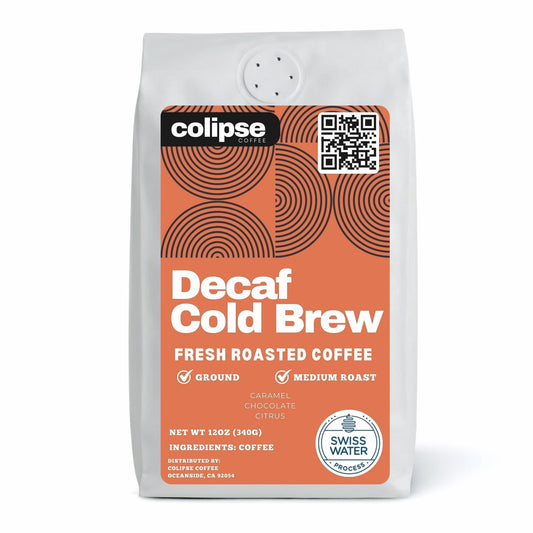
Decaf Cold Brew Coffee
Regular price $23.50 USDSale price $23.50 USD Regular priceUnit price per$27.95 USD -

Half Caff Coffee Beans Swiss Water® Process
Regular price $23.50 USDSale price $23.50 USD Regular priceUnit price per$24.95 USD -

Donut Shop Decaf Medium Roast Coffee
Regular price $23.50 USDSale price $23.50 USD Regular priceUnit price per$27.95 USD -

Dark Roast Decaf Coffee Swiss Water® Process
Regular price $23.95 USDSale price $23.95 USD Regular priceUnit price per$24.95 USD -

Swiss Water® Decaf Coffee Pods For Keurig®
Regular price $21.99 USDSale price $21.99 USD Regular priceUnit price per$23.99 USD


Scientific Research
We are committed to science-backed wellness in every cup. Our Swiss Water® decaf coffee selections are supported by peer-reviewed studies showing they use no added chemical solvents, minimize residues, and better preserve key flavor compounds such as chlorogenic acids, volatiles, and origin-specific notes compared to traditional solvent-based decaffeination. Every Colipse Swiss Water® decaf coffee is sourced with purity and quality in mind for a cleaner, more flavorful experience.
A 2006 study published in the Journal of Agricultural and Food Chemistry found that water-decaffeinated Arabica coffees retained higher levels of chlorogenic acids (CGA) in green beans compared to expectations from solvent methods.
A 2022 study published in Molecules reported that reduced-caffeine coffee blends incorporating Swiss Water Process decaffeinated Robusta beans exhibited pronounced chocolate and nutty aromas, satisfactory bitterness, astringency, and overall sensory appeal in brewed forms like espresso, while preserving high levels of bioactive compounds such as caffeoylquinic acids that enhance flavor and antioxidant properties compared to solvent-based alternatives.
A 2024 study published in Food Chemistry analyzed volatile and nonvolatile compounds in water-decaffeinated versus regular coffee under varied roasting conditions, finding that while decaffeinated samples showed some reductions in pyrazines (e.g., 58% lower 3-ethyl-2,5-dimethyl pyrazine contributing to nutty/roasted notes), the water process minimized broader flavor degradation compared to solvent methods.
A 2022 study published in Journal of Food Composition and Analysis evaluated regular and decaffeinated (including water-processed) coffee beans, noting that water decaffeination caused less significant decreases in chlorogenic acid isomers than roasting or solvent-based processes, helping maintain acidity, astringency, and bitterness profiles that influence final flavor without introducing chemical residues.
Why Swiss Water® Process Decaf?
The Swiss Water® Process is the gold standard for chemical-free decaffeination. Developed in Switzerland and commercially refined in Vancouver, Canada, this method uses only water, temperature, and time to remove 99.9% of caffeine from green coffee beans.
Most decaf coffee on grocery shelves uses methylene chloride or ethyl acetate — industrial solvents that strip caffeine but also strip flavor. Swiss Water does neither. It preserves the origin character, the tasting notes, and the complexity that make specialty coffee worth drinking.
Every batch of Colipse decaf is Swiss Water® certified, meaning it meets strict standards for caffeine removal and quality control. The process retains the oils, sugars, and acids that create the flavors you actually want in your cup.
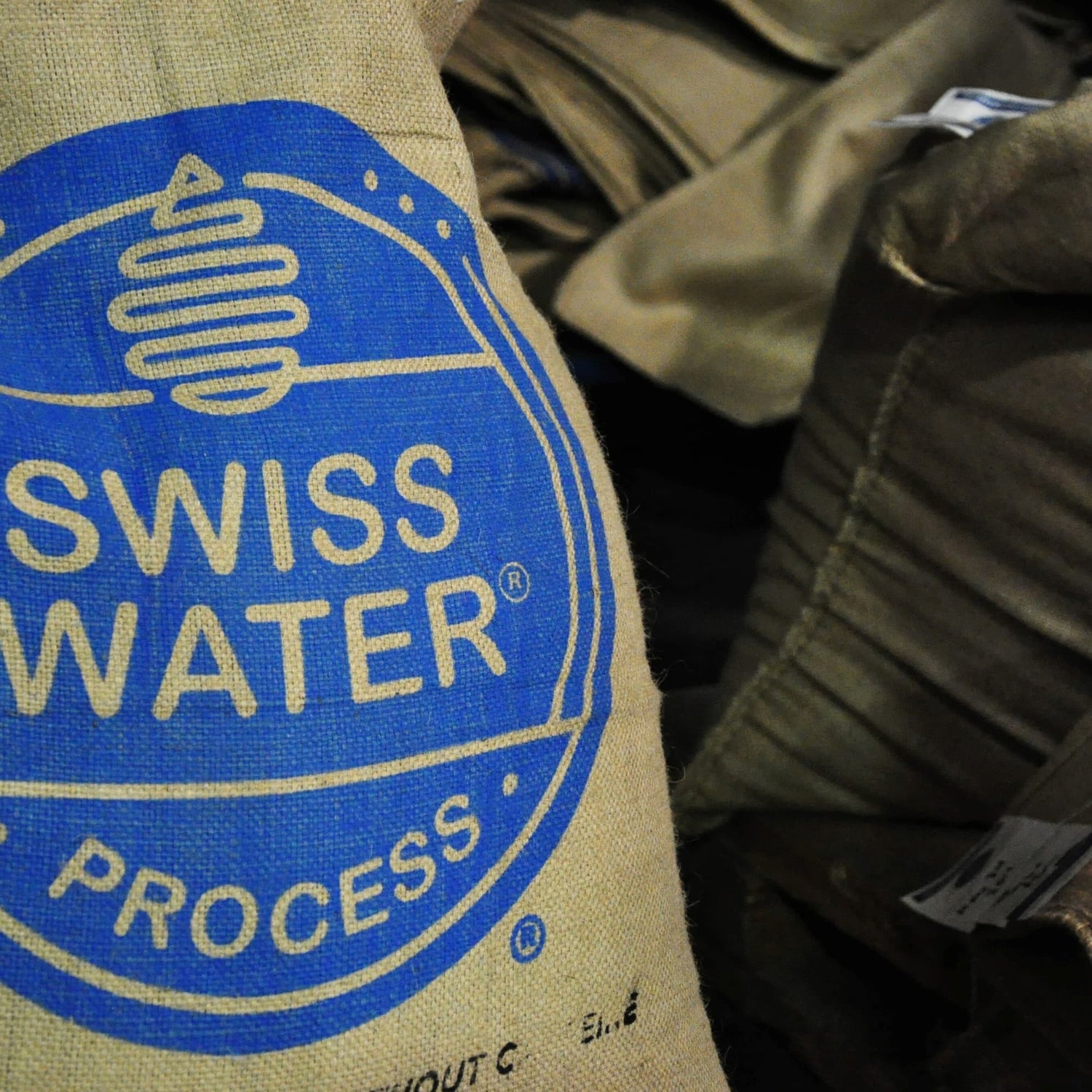
How the Swiss Water® Process Works
- Green coffee beans are soaked in hot water, which dissolves caffeine and flavor compounds.
- The water passes through activated charcoal filters that capture caffeine molecules but let flavor molecules pass through.
- This caffeine-free, flavor-rich water (called Green Coffee Extract) is reused to soak new batches of beans.
- Because the water is already saturated with flavor compounds, only caffeine migrates out of the new beans, not the flavor.
- The result is 99.9% caffeine-free coffee that tastes like the real thing.
This is why Colipse Swiss Water decaf tastes different from cheap decaf. The flavor stays in the bean.
Swiss Water Decaf Coffee FAQs
Find answers to common questions about Colipse Decaf Coffee Beans.
Swiss Water® Process decaf coffee is coffee decaffeinated using only water — no chemicals, no solvents, no shortcuts. The process was developed in Switzerland in the 1930s and commercialized in British Columbia, Canada. Green coffee beans are soaked in water saturated with coffee's soluble flavor compounds. Caffeine migrates out of the beans into the water, where it is trapped by activated charcoal filters. The flavor compounds, too large to pass through the filter, stay in the water and return to the beans. This cycle repeats until 99.9% of caffeine is removed. The Swiss Water® name is a registered certification — only decaf processed at the Swiss Water facility in Burnaby, BC carries this label. Colipse sources all decaf from Swiss Water® certified processors to guarantee a chemical-free cup.
The best decaf coffee starts with specialty-grade green beans, uses a chemical-free decaffeination process like Swiss Water®, and is roasted fresh — not months in advance. Look for single-origin or carefully blended decaf from roasters who disclose their decaf method. Avoid brands that use methylene chloride or ethyl acetate, which are common in mass-market decaf. Freshness matters more with decaf because the decaffeination process makes beans more porous, meaning they lose flavor faster after roasting. Colipse roasts decaf to order and ships within 3–5 days, so your bag arrives at peak flavor. Our Decaf Espresso blend is the best-seller, with tasting notes of blueberries, dark chocolate, and caramel.
Yes. Swiss Water® Process decaf uses zero chemicals. The entire process relies on water, temperature, and time. No methylene chloride. No ethyl acetate. No carbon dioxide under pressure. This matters because methylene chloride is classified as a potential carcinogen, and ethyl acetate — often marketed as "natural" because it occurs in fruit — is still an industrial solvent when used in decaffeination. The FDA allows trace residues of both in decaf coffee. Swiss Water eliminates this concern entirely. If you want decaf coffee without chemicals, look for the Swiss Water® certification on the bag or ask the roaster directly.
Decaf coffee is a popular choice for people managing acid reflux, GERD, or sensitive stomachs. Caffeine stimulates stomach acid production, so removing it reduces one of the main triggers. Swiss Water® Process decaf is a strong option because it avoids chemical solvents that can irritate the gut lining. Dark roast decaf tends to be lower in acid than light roast, making it even gentler. Colipse Dark Roast Decaf and Decaf Cold Brew are both smooth, low-acid options for sensitive drinkers. Cold brew is naturally 60–70% less acidic than hot-brewed coffee, making it the gentlest option available.
The best decaf espresso beans are specialty-grade, medium-to-dark roasted, and Swiss Water® processed. Espresso demands beans that produce crema, body, and sweetness under pressure — and cheap decaf rarely delivers. Colipse Decaf Espresso Beans are blended and roasted specifically for espresso extraction. They produce thick crema and tasting notes of blueberries, dark chocolate, and caramel whether pulled on a Breville Barista Express, Gaggia Classic Pro, Rancilio Silvia, De'Longhi, or any bean-to-cup machine like the Jura E8 or Philips 4300. Available as whole bean for fresh grinding or pre-ground in fine espresso grind.
Yes, and decaf cold brew is one of the smoothest, lowest-acid ways to drink coffee. Cold brewing extracts flavor slowly over 12–24 hours at cold or room temperature, which naturally reduces acidity by 60–70%. Pair this with Swiss Water® Process decaf and you get a cup that's gentle on the stomach, free of chemicals, and free of caffeine. Colipse Decaf Cold Brew Coffee comes pre-ground in a coarse grind optimized for immersion brewing. Use a 1:8 ratio of coffee to water, steep for 16–20 hours in the fridge, and strain. One batch makes enough concentrate for a full week of iced coffees, lattes, or straight sipping.
Most health organizations, including the American College of Obstetricians and Gynecologists, recommend limiting caffeine during pregnancy to under 200 mg per day. Swiss Water® Process decaf removes 99.9% of caffeine, leaving roughly 2–5 mg per cup — well within safe limits. Many pregnant women switch to Swiss Water decaf to maintain their coffee ritual without exceeding caffeine guidelines. The chemical-free processing is an added benefit, as it eliminates exposure to methylene chloride or ethyl acetate residues found in conventionally decaffeinated coffee.
Caffeine causes a short-term spike in blood pressure, which is why doctors often recommend reducing caffeine intake for patients with hypertension. Swiss Water® decaf is a practical alternative — it lets you keep your coffee habit without the blood pressure spike. With only 2–5 mg of caffeine per cup (compared to 95–200 mg in regular coffee), Swiss Water decaf is functionally caffeine-free. It also avoids the chemical solvents used in most commercial decaf, making it a cleaner choice overall.
Colipse offers Swiss Water® Process decaf in 12 oz, 16 oz, 2 lb, and 5 lb bags. The 5 lb bags provide up to 40% savings per ounce compared to the 12 oz size. All sizes are available in whole bean or three grind options: coarse (French press, cold brew), medium (drip, pour over), and fine (espresso, moka pot). Subscriptions are available with 5% savings on every order, flexible scheduling, and free U.S. shipping. You can pause, skip, switch grinds, or cancel anytime with no commitment.
Most decaf coffee is processed using methylene chloride or ethyl acetate — chemical solvents that dissolve caffeine but also strip flavor. Swiss Water® uses only water and activated charcoal filters, preserving the origin character and complexity of the beans. The difference is noticeable in the cup: Swiss Water decaf tastes like real coffee. Grocery-store decaf often tastes flat, papery, or hollow because the chemical process damaged the flavor compounds. Swiss Water decaf costs more to produce, which is why most mass-market brands avoid it. Colipse exclusively uses Swiss Water® Process because we refuse to compromise on flavor or safety.
Swiss Water® Process removes 99.9% of caffeine from green coffee beans. A typical cup of Swiss Water decaf contains 2–5 mg of caffeine, compared to 95–200 mg in regular coffee. For context, a cup of green tea has about 25–50 mg. This makes Swiss Water decaf suitable for people avoiding caffeine for medical reasons (blood pressure, anxiety, medication interactions, pregnancy) or those who simply want to enjoy evening coffee without disrupting sleep.
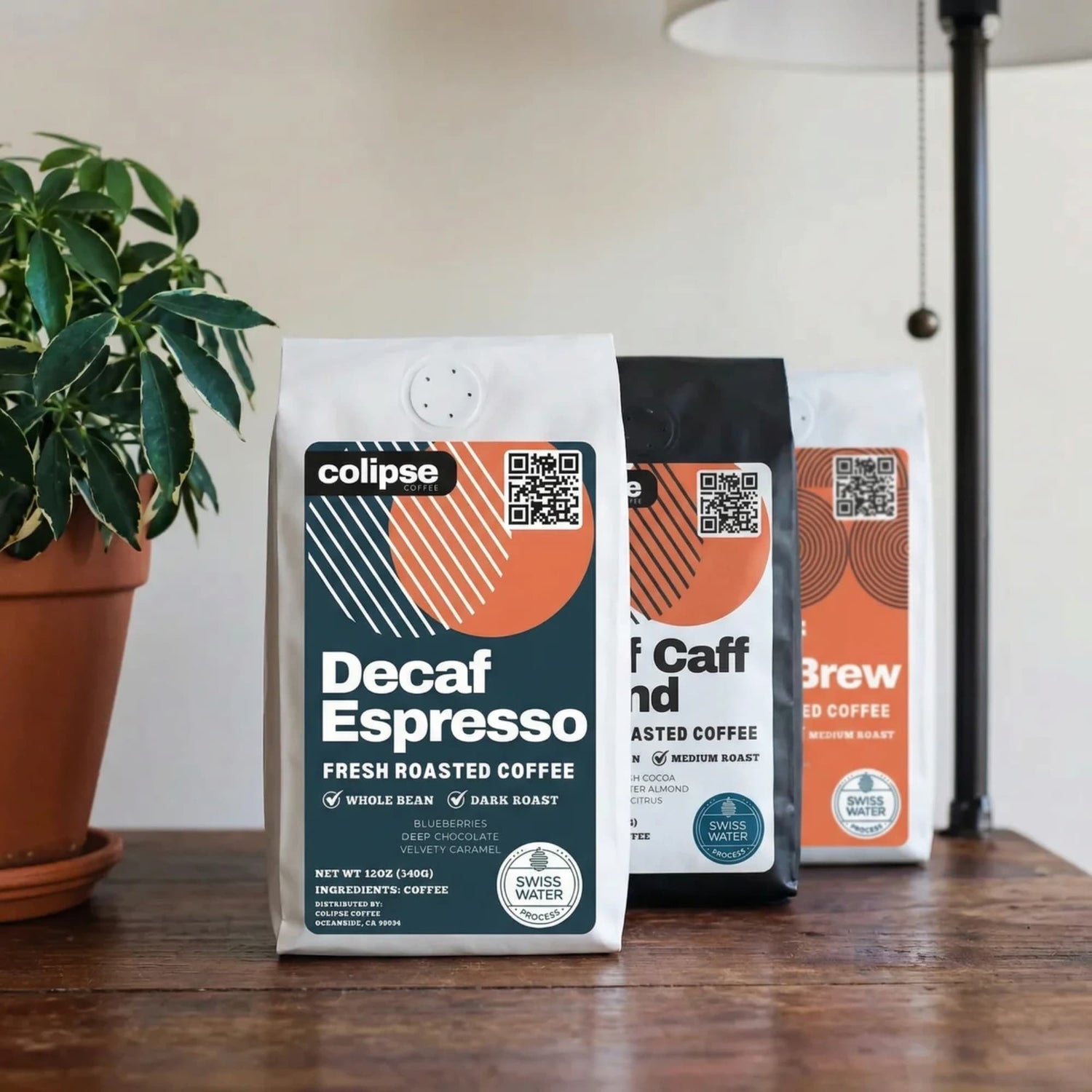
Swiss Water® Decaf Coffee Beans & Grounds
Colipse roasts Swiss Water® Process decaf for people who refuse to settle for flat, stale, chemical-processed coffee. Every bag is roasted after you order, sealed in oxygen-blocking packaging, and shipped within 3–5 days. Five products cover every preference — espresso, cold brew, half-caff, medium roast, and dark roast — available in whole bean or three grind sizes.
Swiss Water decaf is growing fast because coffee drinkers are learning the difference. The old way uses methylene chloride or ethyl acetate to strip caffeine. Swiss Water uses only water and charcoal filtration. One method preserves flavor. The other destroys it. Colipse chose the one that preserves it.
Our decaf lineup includes single-origin Peruvian beans and our signature Decaf Espresso blend with tasting notes of blueberry, dark chocolate, and caramel. Browse the collection above and pick the roast, grind, and size that fits your routine.
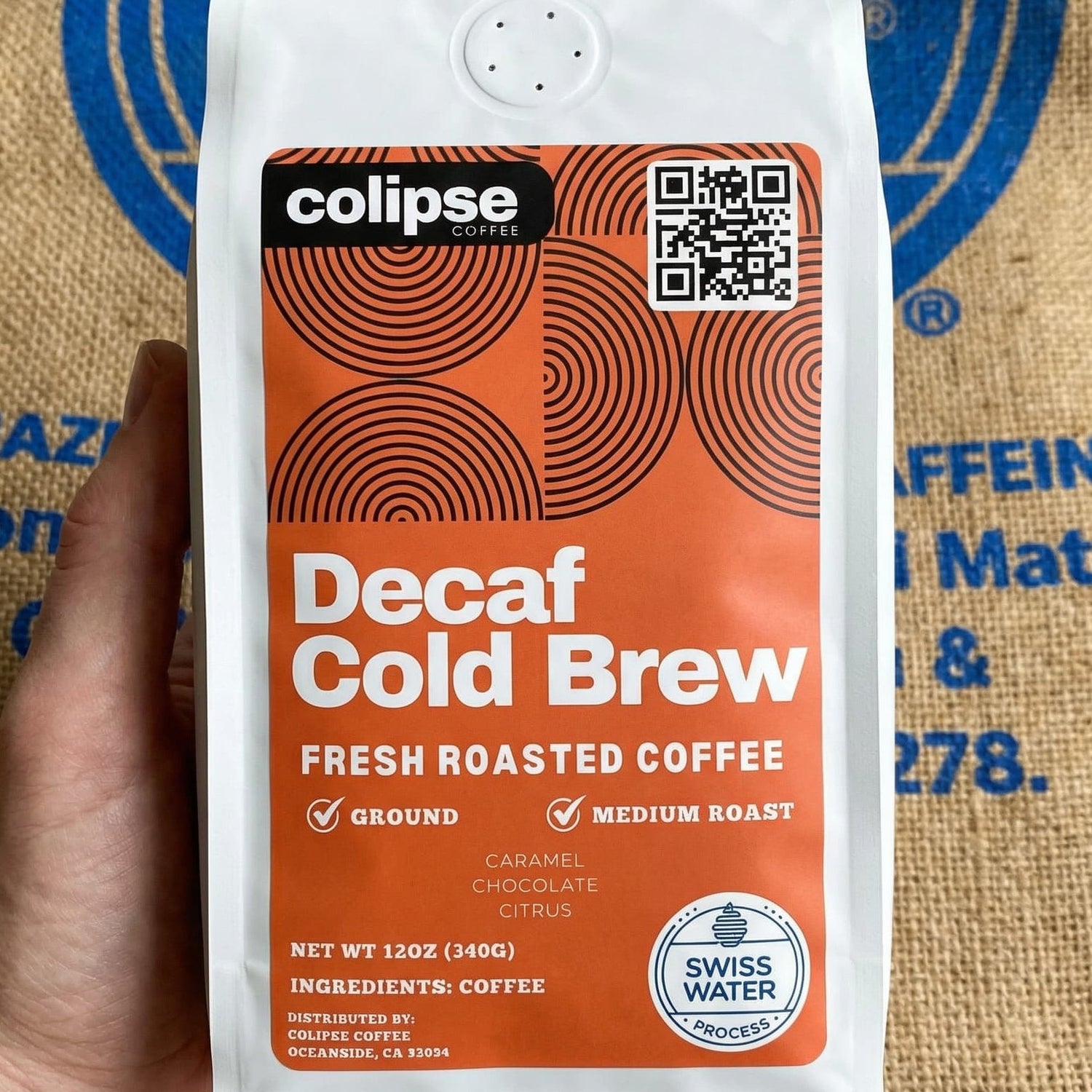
Best Decaf Coffee Beans
Whole bean decaf stays fresh longer because the intact structure slows oxidation. Grinding exposes surface area to air, which is why pre-ground decaf loses flavor within days of opening. This matters more for decaf than regular coffee — the Swiss Water Process makes beans slightly more porous, so staling accelerates.
Choose whole bean if: You own a grinder and want the freshest possible cup. Grind right before brewing. Use within 3–4 weeks of the roast date.
Choose ground if: You want convenience without sacrificing quality. Colipse grinds at time of packing and seals immediately. Pick fine (espresso, moka pot), medium (drip, pour over), or coarse (French press, cold brew).
Both options are roasted to order and shipped within 3–5 days. The 5 lb bags save up to 40% per ounce compared to 12 oz bags — a practical choice for daily decaf drinkers.
Swiss Water Decaf vs Methylene Chloride Decaf
Most decaf coffee sold in the U.S. is decaffeinated with methylene chloride — a chemical solvent classified as a potential carcinogen by the National Toxicology Program. The FDA permits up to 10 parts per million in finished decaf. Brands rarely disclose which method they use.
Swiss Water® uses zero chemicals. The process relies on water saturated with coffee's soluble flavor compounds. Caffeine migrates out of the beans; flavor stays in. Activated charcoal filters trap the caffeine. The cycle repeats until 99.9% of caffeine is gone.
The taste difference is obvious. Chemical-processed decaf often tastes papery, hollow, or oddly bitter — because the solvents strip flavor compounds alongside caffeine. Swiss Water decaf retains the oils, sugars, and acids that create body, sweetness, and complexity.
If a brand says "naturally decaffeinated" but doesn't specify Swiss Water® or CO2 process, it likely uses ethyl acetate — technically derived from fruit, but still an industrial solvent in practice. Look for the Swiss Water® certification mark on the bag or ask the roaster directly.

Decaf Espresso — Beans, Machines & Brew Tips
Decaf espresso has a reputation for thin shots and weak crema. The problem is rarely the machine — it's the beans. Chemical decaffeination strips the oils and sugars that produce crema under pressure. Swiss Water® Process preserves them, which is why specialty decaf espresso pulls differently from grocery-store decaf.
Colipse Decaf Espresso Beans are blended and roasted to a medium-dark profile that develops caramelization without bitterness. Tasting notes: blueberry, dark chocolate, caramel. Thick crema. Works on every setup:
- Automatic bean-to-cup: Jura E8, De'Longhi Dinamica Plus, Philips 4300, Miele CM5310
- Semi-automatic: Breville Barista Express, Gaggia Classic Pro, Rancilio Silvia
- Prosumer: La Marzocco Linea Mini, Lelit Bianca, Profitec Pro 600
Available as whole bean (grind fresh for best results) or fine espresso grind. Dial in at 18g dose, 36g yield, 25–30 seconds — adjust ratio to taste.
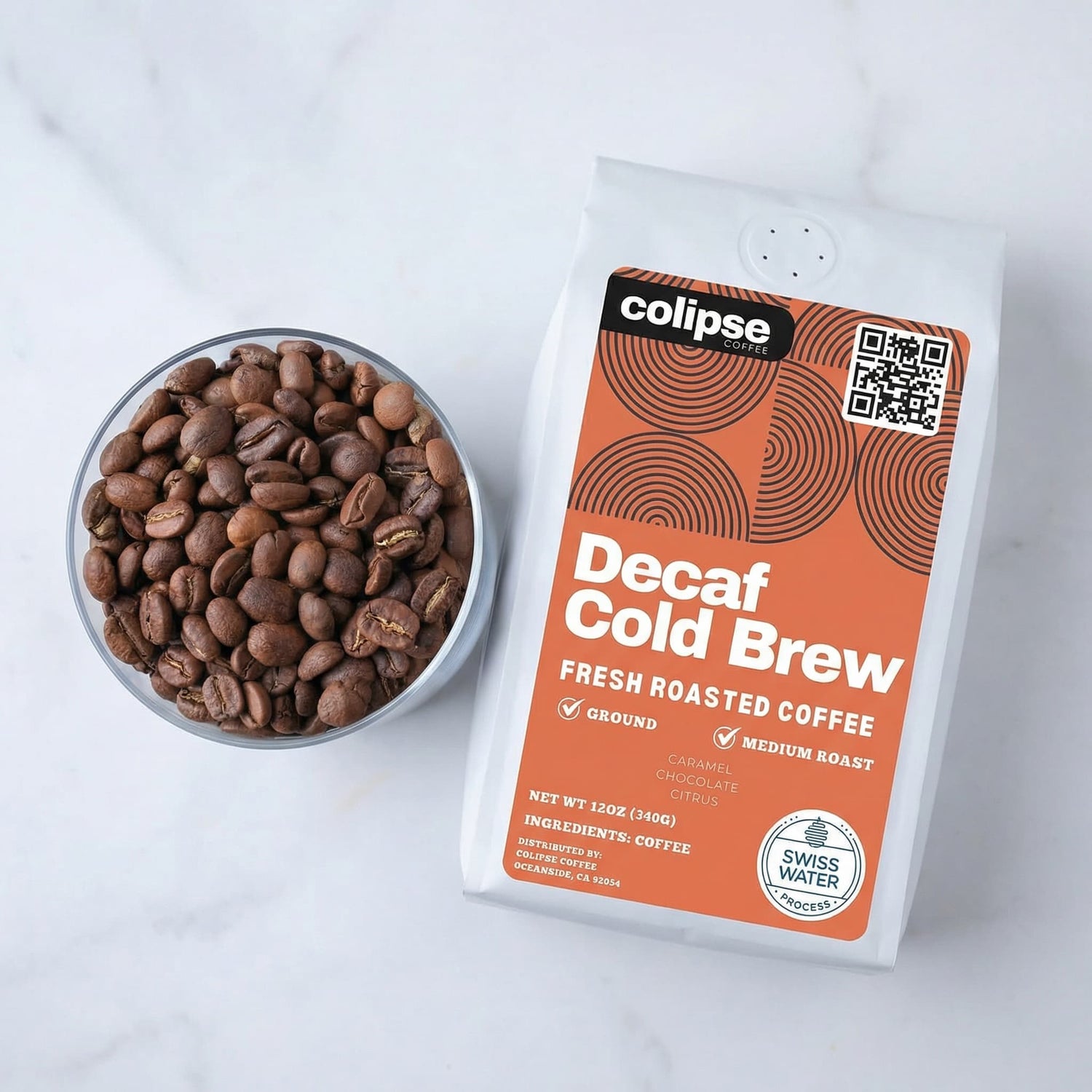
Decaf Cold Brew — How to Make It and Why It Works
Cold brew extracts coffee slowly at cold or room temperature over 12–24 hours. This slow extraction pulls sweetness and body while leaving behind much of the acidity and bitterness. Pair cold extraction with Swiss Water® decaf and you get a cup that's caffeine-free, chemical-free, and naturally low-acid.
How to brew Colipse Decaf Cold Brew:
- Add 1 cup of coarse-ground decaf to a mason jar, French press, or cold brew maker.
- Pour 8 cups of cold filtered water over the grounds.
- Stir gently. Cover. Refrigerate 16–20 hours.
- Strain through a fine mesh filter or French press plunger.
- Store the concentrate in the fridge for up to 10 days.
Dilute 1:1 with water or milk for drinking strength. Serve over ice, blend into smoothies, or heat for a warm mug. One batch makes roughly 8 servings of concentrate — enough for a full week.
Colipse Decaf Cold Brew Coffee ships pre-ground in an optimized coarse grind, so you skip the grinder and go straight to steeping.
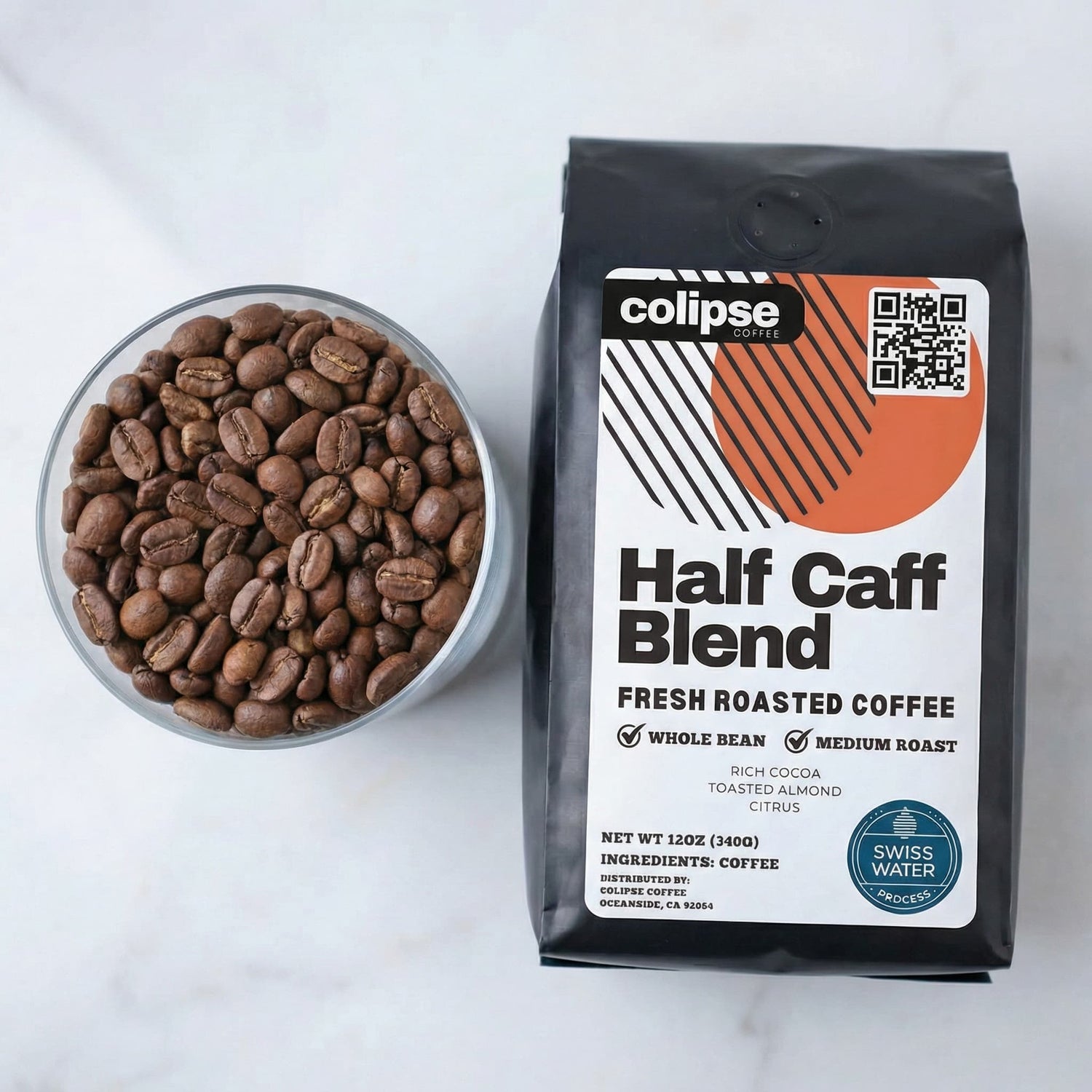
Half-Caff Coffee The Middle Ground
Not ready to go fully decaf? Half-caff splits the difference — 50% regular beans, 50% Swiss Water® decaf, blended before roasting for a unified flavor profile. You get roughly 45–50 mg of caffeine per cup instead of the usual 95–200 mg.
Colipse Half Caff Coffee is built for people tapering off caffeine, managing afternoon intake, or sharing a pot between a caffeine drinker and a decaf drinker. It brews and tastes like regular coffee because it is half regular coffee.
This is also a smart choice for espresso. Half-caff shots deliver enough caffeine for a mild lift without the jitters, crash, or sleep disruption. Popular with people who drink multiple cups per day and want to cut total intake without giving up the ritual.
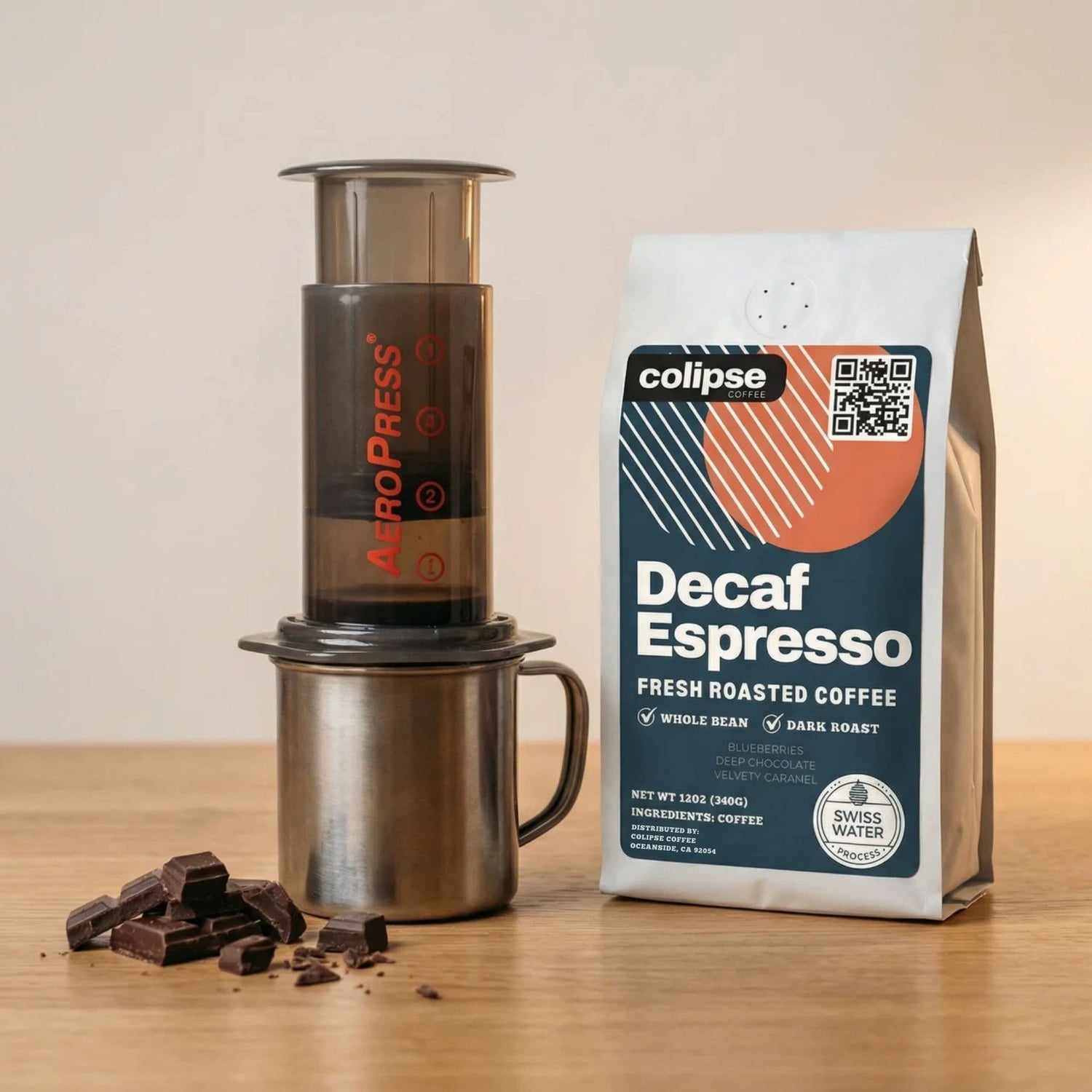
Decaf Coffee for Every Brew Method
Swiss Water decaf performs across every brewing method. The key is matching grind size to your brewer:
Espresso (fine grind): Colipse Decaf Espresso Beans, ground fine. For Breville, Gaggia, Rancilio, La Marzocco, De'Longhi, Jura, and all bean-to-cup machines.
Pour over (medium grind): Donut Shop Decaf or Dark Roast Decaf, ground medium. Works with Hario V60, Chemex, Kalita Wave, and Melitta drippers.
Drip coffee maker (medium grind): Any Colipse decaf, ground medium. Fits standard 8-12 cup machines from Cuisinart, Ninja, Breville Precision Brewer, Technivorm Moccamaster.
French press (coarse grind): Dark Roast Decaf or Half Caff, ground coarse. Steep 4 minutes at 200°F for a full-bodied cup.
Cold brew (coarse grind): Colipse Decaf Cold Brew, pre-ground coarse. Steep 16-20 hours in the fridge.
Moka pot (fine grind): Decaf Espresso Beans, ground fine. Fill the basket level without tamping.
AeroPress (medium-fine grind): Any Colipse decaf, ground medium-fine. Inverted method, 1:15 ratio, 2-minute steep.
All Colipse decaf is available in whole bean or pre-ground to the right size for your brewer.