

Coffee Buying Guide: How to Choose the Best Coffee Beans

Half Caff Coffee: Best Beans, Caffeine, and Whe...
Half caff coffee refers to a coffee beverage made with a 50/50 mix of regular and decaffeinated coffee. Half caff coffee contains about 50% of the caffeine of regular coffee, while decaf coffee has at least 97% of its caffeine removed. An 8 oz cup of half caff coffee contains approximately 40-50 milligrams of caffeine, according to U.S. Department of...
Half Caff Coffee: Best Beans, Caffeine, and Whe...
Half caff coffee refers to a coffee beverage made with a 50/50 mix of regular and decaffeinated coffee. Half caff coffee contains about 50% of the caffeine of regular coffee, while decaf coffee has at least 97% of its caffeine removed. An 8 oz cup of half caff coffee contains approximately 40-50 milligrams of caffeine, according to U.S. Department of...

What is Heirloom Coffee?
Heirloom coffee from Ethiopia refers to its native, often unclassified and diverse coffee varieties. This broad term covers an estimated 6,000 to 15,000 unique varieties. "Heirloom coffee" refers to non-hybrid, wild, indigenous, or genetically undefined coffee. Some grow wild in Ethiopian forests, while others are cultivated traditionally. Heirloom coffee is classified into JARC varieties (like 74110, 74112, and 7440) and...
What is Heirloom Coffee?
Heirloom coffee from Ethiopia refers to its native, often unclassified and diverse coffee varieties. This broad term covers an estimated 6,000 to 15,000 unique varieties. "Heirloom coffee" refers to non-hybrid, wild, indigenous, or genetically undefined coffee. Some grow wild in Ethiopian forests, while others are cultivated traditionally. Heirloom coffee is classified into JARC varieties (like 74110, 74112, and 7440) and...

30 Coffee Varieties, Varietals, Cultivars and H...
Coffee varieties are subspecies and genetic variations within coffee plants, resulting from natural mutations or breeding. Breeding aims to develop plants with traits like disease resistance, higher yield potential, or unique flavor profiles. The main varieties of Arabica coffee including Typica, Bourbon, Geisha, Caturra, SL28, and Ethiopian Heirloom. The main varieties of Robusta coffee are Nganda, Kouilou, Erecta, and BP...
30 Coffee Varieties, Varietals, Cultivars and H...
Coffee varieties are subspecies and genetic variations within coffee plants, resulting from natural mutations or breeding. Breeding aims to develop plants with traits like disease resistance, higher yield potential, or unique flavor profiles. The main varieties of Arabica coffee including Typica, Bourbon, Geisha, Caturra, SL28, and Ethiopian Heirloom. The main varieties of Robusta coffee are Nganda, Kouilou, Erecta, and BP...
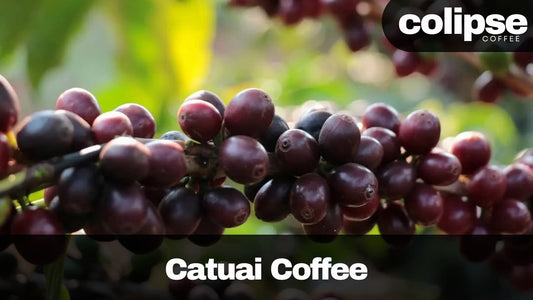
Catuai Coffee Beans: Red and Yellow Varietals
Catuai is a hybrid coffee varietal developed in Brazil in 1949 by crossing Mundo Novo and Caturra. Its botanical name is Coffea arabica L. var. Catuaí. Catuai coffee beans are small, round, and greenish-blue, growing inside red or yellow cherries. Catuai coffee has several varietals, including Red, Yellow, IAC SH3, and 99. This coffee has a balanced, sweet and acidic...
Catuai Coffee Beans: Red and Yellow Varietals
Catuai is a hybrid coffee varietal developed in Brazil in 1949 by crossing Mundo Novo and Caturra. Its botanical name is Coffea arabica L. var. Catuaí. Catuai coffee beans are small, round, and greenish-blue, growing inside red or yellow cherries. Catuai coffee has several varietals, including Red, Yellow, IAC SH3, and 99. This coffee has a balanced, sweet and acidic...

Caturra Coffee Beans: Taste and Varietals
Caturra coffee, a natural mutation of the Bourbon variety, is a primary cultivar for breeding new varieties. The name "Caturra" comes from the Guarani word for "small," referring to the plant's dwarfism. Caturra coffee beans are seeds from the Coffea arabica var. Caturra plant. They have a balanced, sweet, and citrusy flavor with medium acidity. Caturra coffee has four varieties:...
Caturra Coffee Beans: Taste and Varietals
Caturra coffee, a natural mutation of the Bourbon variety, is a primary cultivar for breeding new varieties. The name "Caturra" comes from the Guarani word for "small," referring to the plant's dwarfism. Caturra coffee beans are seeds from the Coffea arabica var. Caturra plant. They have a balanced, sweet, and citrusy flavor with medium acidity. Caturra coffee has four varieties:...

Bourbon Coffee Beans: Red, Yellow, Pink, and Or...
Bourbon coffee is a primary Coffea arabica cultivar that is genetically and culturally significant in coffee production. Bourbon coffee beans are the seeds of the Coffea arabica var. Bourbon plant and are found inside small cherries that ripen to red, yellow, or pink. Bourbon coffee varieties—including Red Bourbon, Yellow Bourbon, Pink Bourbon, Orange Bourbon, Bourbon Pointu, and Bourbon Sidra—differ in...
Bourbon Coffee Beans: Red, Yellow, Pink, and Or...
Bourbon coffee is a primary Coffea arabica cultivar that is genetically and culturally significant in coffee production. Bourbon coffee beans are the seeds of the Coffea arabica var. Bourbon plant and are found inside small cherries that ripen to red, yellow, or pink. Bourbon coffee varieties—including Red Bourbon, Yellow Bourbon, Pink Bourbon, Orange Bourbon, Bourbon Pointu, and Bourbon Sidra—differ in...

Espresso vs Coffee: What's the Difference?
Espresso and coffee are both caffeinated beverages, but they differ. Espresso is a concentrated 1-ounce Italian drink made with an espresso machine from finely-ground coffee beans. In the U.S., 'coffee' typically refers to an 8-ounce cup of filter coffee brewed via auto-drip, pour-over, or French press methods. A 1-ounce espresso shot has about 64 mg of caffeine, compared to approximately...
Espresso vs Coffee: What's the Difference?
Espresso and coffee are both caffeinated beverages, but they differ. Espresso is a concentrated 1-ounce Italian drink made with an espresso machine from finely-ground coffee beans. In the U.S., 'coffee' typically refers to an 8-ounce cup of filter coffee brewed via auto-drip, pour-over, or French press methods. A 1-ounce espresso shot has about 64 mg of caffeine, compared to approximately...

Cold Brew vs Iced Coffee: What's the Difference?
Cold brew and iced coffee are not the same. Cold brew is steeped in room temperature water for 12-24 hours. Iced coffee is hot-brewed and then poured over ice. Cold brew coffee has 185 to 205 mg of caffeine per 16-ounce serving, significantly more than iced coffee. Apart from caffeine, cold brew and iced coffee differ in brewing process, time,...
Cold Brew vs Iced Coffee: What's the Difference?
Cold brew and iced coffee are not the same. Cold brew is steeped in room temperature water for 12-24 hours. Iced coffee is hot-brewed and then poured over ice. Cold brew coffee has 185 to 205 mg of caffeine per 16-ounce serving, significantly more than iced coffee. Apart from caffeine, cold brew and iced coffee differ in brewing process, time,...

Geisha Coffee: Origin, Price, and Buying Guide
Geisha coffee is a popular, expensive Coffea arabica variety with long, slender beans. Geisha coffee's unique flavor, careful production, limited growth, and high demand make it special. Geisha coffee prices vary by origin, quality, and processing. Green Geisha beans from Colombia, Guatemala, or Costa Rica cost $25–50 per pound, but top microlots exceed $1,000. This coffee has a complex, exquisite...
Geisha Coffee: Origin, Price, and Buying Guide
Geisha coffee is a popular, expensive Coffea arabica variety with long, slender beans. Geisha coffee's unique flavor, careful production, limited growth, and high demand make it special. Geisha coffee prices vary by origin, quality, and processing. Green Geisha beans from Colombia, Guatemala, or Costa Rica cost $25–50 per pound, but top microlots exceed $1,000. This coffee has a complex, exquisite...

Monkey Poop Coffee: What It Is and How It's Made
Monkey coffee is a rare, expensive coffee made from beans chewed and spat out by monkeys. This type of coffee is mainly produced in India and Taiwan. Wild monkeys naturally create "monkey poop coffee" by eating the outer layer of coffee cherries and discarding the beans. This process ferments the beans, resulting in a smoother, less acidic coffee. Monkey coffee...
Monkey Poop Coffee: What It Is and How It's Made
Monkey coffee is a rare, expensive coffee made from beans chewed and spat out by monkeys. This type of coffee is mainly produced in India and Taiwan. Wild monkeys naturally create "monkey poop coffee" by eating the outer layer of coffee cherries and discarding the beans. This process ferments the beans, resulting in a smoother, less acidic coffee. Monkey coffee...

Kopi Luwak Coffee: Production, Taste, and Price
Kopi Luwak, or civet coffee, is an expensive coffee made from beans that civets eat and excrete. Civets are small, cat-like animals. Most Kopi Luwak production involves keeping civets in cruel cages, which is unethical animal abuse. PETA reports that up to 80% of Kopi Luwak labeled "wild-sourced" is actually from caged civets. Food scientist Massimo Marcone explains that the...
Kopi Luwak Coffee: Production, Taste, and Price
Kopi Luwak, or civet coffee, is an expensive coffee made from beans that civets eat and excrete. Civets are small, cat-like animals. Most Kopi Luwak production involves keeping civets in cruel cages, which is unethical animal abuse. PETA reports that up to 80% of Kopi Luwak labeled "wild-sourced" is actually from caged civets. Food scientist Massimo Marcone explains that the...

Most Expensive Coffee in the World
The most expensive coffees can cost thousands of dollars per kilogram, but the record depends on how price is measured. Kopi Luwak from Indonesia is the coffee most widely recognized as the world's most expensive, with wild-sourced beans selling for $600 to $1,300 per pound. Black Ivory Coffee from Thailand is one of the most expensive commercially sold coffees at...
Most Expensive Coffee in the World
The most expensive coffees can cost thousands of dollars per kilogram, but the record depends on how price is measured. Kopi Luwak from Indonesia is the coffee most widely recognized as the world's most expensive, with wild-sourced beans selling for $600 to $1,300 per pound. Black Ivory Coffee from Thailand is one of the most expensive commercially sold coffees at...

Mexican Coffee Beans: Regions, Production, Flav...
Mexican coffee beans are primarily Arabica grown in Mexico, with about 85% Arabica and 15% Robusta, including varieties such as Typica, Bourbon, and Caturra. Mexico has 49 coffee regions across 15 states, but Chiapas, Veracruz, Oaxaca, and Puebla produce 90% of the country’s coffee, mainly cultivated between 600–1,200 meters. Mexico is the 10th largest coffee producer globally with 3.86 million...
Mexican Coffee Beans: Regions, Production, Flav...
Mexican coffee beans are primarily Arabica grown in Mexico, with about 85% Arabica and 15% Robusta, including varieties such as Typica, Bourbon, and Caturra. Mexico has 49 coffee regions across 15 states, but Chiapas, Veracruz, Oaxaca, and Puebla produce 90% of the country’s coffee, mainly cultivated between 600–1,200 meters. Mexico is the 10th largest coffee producer globally with 3.86 million...

Best Guatemalan Coffee: Brands, Taste, and Grow...
Guatemalan coffee, primarily Arabica varietals like Typica and Bourbon, is grown in eight main areas, including Antigua, Fraijanes, and Huehuetenango. Guatemala produced 3,4 million 60-kg bags of coffee in 2023, about 3% of its GDP. Guatemalan coffee production involves planting seeds, transplanting to high-altitude plantations with fertile soil, using shade-grown methods, and hand-harvesting ripe cherries from November to April. The...
Best Guatemalan Coffee: Brands, Taste, and Grow...
Guatemalan coffee, primarily Arabica varietals like Typica and Bourbon, is grown in eight main areas, including Antigua, Fraijanes, and Huehuetenango. Guatemala produced 3,4 million 60-kg bags of coffee in 2023, about 3% of its GDP. Guatemalan coffee production involves planting seeds, transplanting to high-altitude plantations with fertile soil, using shade-grown methods, and hand-harvesting ripe cherries from November to April. The...

Honduras Coffee Beans: Types, Regions, Taste, a...
Honduras coffee is coffee grown in diverse microclimates across Honduras. Honduras coffee beans are seeds of the Arabica coffee plant grown in regions like Copán, Montecillos, and El Paraíso. The most popular Honduran coffee bean varieties are Lempira, Catuai, Caturra, Bourbon, Pacas, Typica, and Parainema. Coffee in Honduras grows in 15 of 18 departments and 210 of 298 municipalities, according...
Honduras Coffee Beans: Types, Regions, Taste, a...
Honduras coffee is coffee grown in diverse microclimates across Honduras. Honduras coffee beans are seeds of the Arabica coffee plant grown in regions like Copán, Montecillos, and El Paraíso. The most popular Honduran coffee bean varieties are Lempira, Catuai, Caturra, Bourbon, Pacas, Typica, and Parainema. Coffee in Honduras grows in 15 of 18 departments and 210 of 298 municipalities, according...

Costa Rican Coffee: Types, Regions, Taste, and ...
Costa Rican coffee is Arabica coffee grown in Costa Rica’s rich volcanic soil at high altitudes. The most common Costa Rican coffee beans are Arabica varietals, including Caturra and Catuai, which dominate production with bright acidity and clean sweetness. Coffee in Costa Rica grows in all 7 provinces across 93,697 hectares, with farms concentrated in San José, Alajuela, Heredia, Puntarenas,...
Costa Rican Coffee: Types, Regions, Taste, and ...
Costa Rican coffee is Arabica coffee grown in Costa Rica’s rich volcanic soil at high altitudes. The most common Costa Rican coffee beans are Arabica varietals, including Caturra and Catuai, which dominate production with bright acidity and clean sweetness. Coffee in Costa Rica grows in all 7 provinces across 93,697 hectares, with farms concentrated in San José, Alajuela, Heredia, Puntarenas,...

Brazilian Coffee: Production, Taste, and Buying...
Brazilian coffee refers to beans grown in Brazil, the world's top coffee producer. Brazilian coffee beans can mean any beans from Brazil, including Arabica and Robusta. The most popular ones, like Santos, Bourbon, and Jacu, are usually high-quality Arabica. Over 90% of Brazil's coffee comes from the southeast states: Minas Gerais, São Paulo, Espírito Santo, and Bahia. Brazil produced over...
Brazilian Coffee: Production, Taste, and Buying...
Brazilian coffee refers to beans grown in Brazil, the world's top coffee producer. Brazilian coffee beans can mean any beans from Brazil, including Arabica and Robusta. The most popular ones, like Santos, Bourbon, and Jacu, are usually high-quality Arabica. Over 90% of Brazil's coffee comes from the southeast states: Minas Gerais, São Paulo, Espírito Santo, and Bahia. Brazil produced over...

Bali Coffee: Types, Taste, and Where To Buy
Bali coffee is from the Indonesian island of Bali. Balinese coffee beans are mainly Arabica, but they also grow Robusta. Some famous types are Blue Moon and Kintamani, and Kopi Luwak (civet coffee). Balinese coffee production involves harvesting cherries, pulping and fermenting the beans, drying them, hulling them, roasting them, and grinding them. Balinese coffee has a balanced, smooth taste...
Bali Coffee: Types, Taste, and Where To Buy
Bali coffee is from the Indonesian island of Bali. Balinese coffee beans are mainly Arabica, but they also grow Robusta. Some famous types are Blue Moon and Kintamani, and Kopi Luwak (civet coffee). Balinese coffee production involves harvesting cherries, pulping and fermenting the beans, drying them, hulling them, roasting them, and grinding them. Balinese coffee has a balanced, smooth taste...

Indonesian Coffee: Growing, Taste, and How To C...
Indonesia, the fourth largest coffee producer globally, offers a diverse range of coffee beans. Indonesia produces many specialty coffees from high-quality Arabica and some Robusta beans. These include Kopi Luwak, Gayo, Kintamani, Bali Blue Moon, Mandheling, Toraja, Wamena, and Temanggung. Indonesian coffee grows mainly on Sumatra, Java, and Sulawesi. Small farms grow the beans using diverse methods influenced by regional...
Indonesian Coffee: Growing, Taste, and How To C...
Indonesia, the fourth largest coffee producer globally, offers a diverse range of coffee beans. Indonesia produces many specialty coffees from high-quality Arabica and some Robusta beans. These include Kopi Luwak, Gayo, Kintamani, Bali Blue Moon, Mandheling, Toraja, Wamena, and Temanggung. Indonesian coffee grows mainly on Sumatra, Java, and Sulawesi. Small farms grow the beans using diverse methods influenced by regional...

Sumatra Coffee: Types, Taste, Production, and B...
Sumatra coffee is a type of coffee that is grown and processed on the Indonesian island of Sumatra. The most popular Sumatran coffee beans are Mandheling, Gayo, Lintong, and more. Sumatra coffee tastes bold and earthy with low acidity, showing woody, nutty, and chocolate notes. Coffee in Sumatra is grown mainly in Aceh, North Sumatra, West Sumatra, and South Sumatra....
Sumatra Coffee: Types, Taste, Production, and B...
Sumatra coffee is a type of coffee that is grown and processed on the Indonesian island of Sumatra. The most popular Sumatran coffee beans are Mandheling, Gayo, Lintong, and more. Sumatra coffee tastes bold and earthy with low acidity, showing woody, nutty, and chocolate notes. Coffee in Sumatra is grown mainly in Aceh, North Sumatra, West Sumatra, and South Sumatra....