


Costa Rica Coffee Beans
Costa Rica Coffee Beans
Couldn't load pickup availability
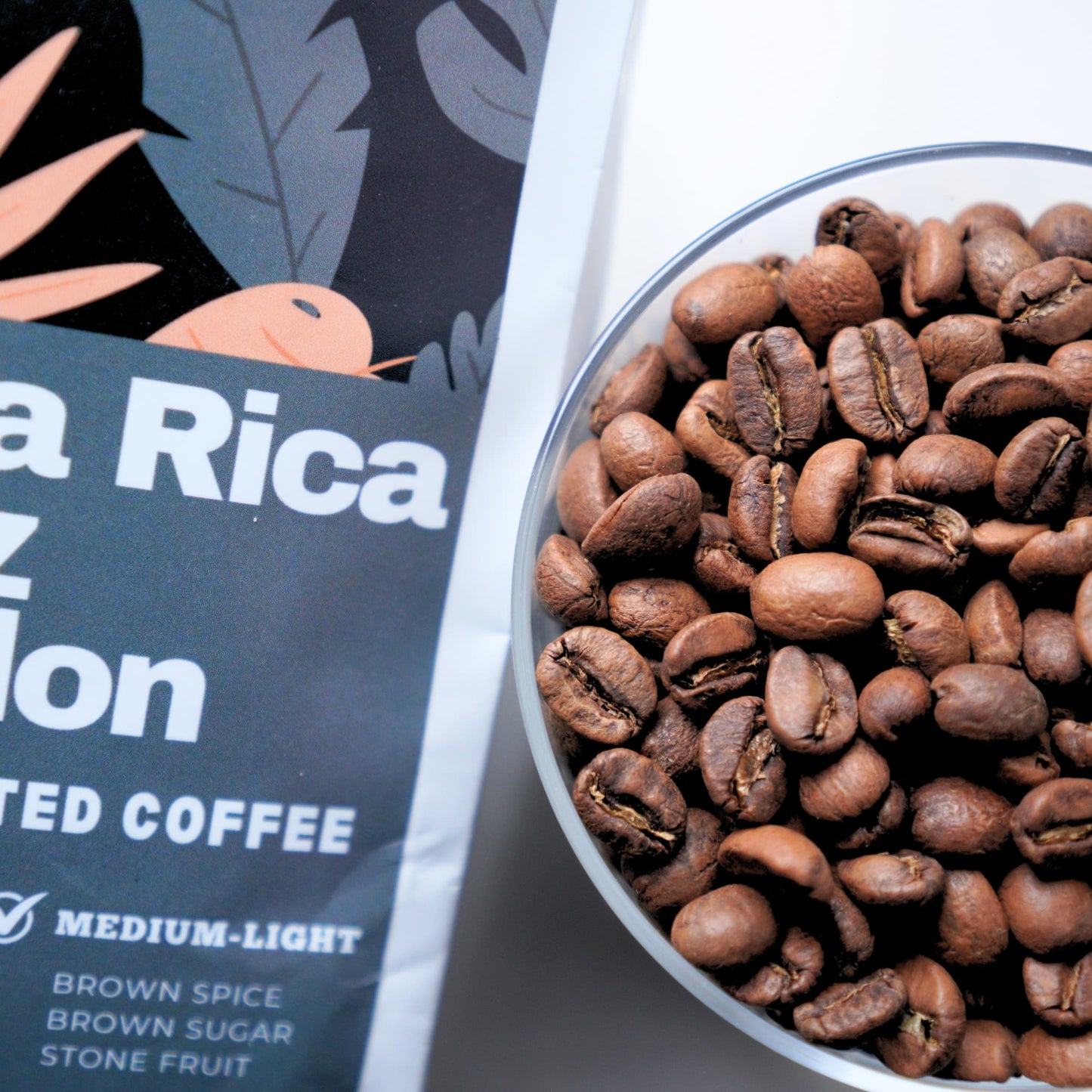
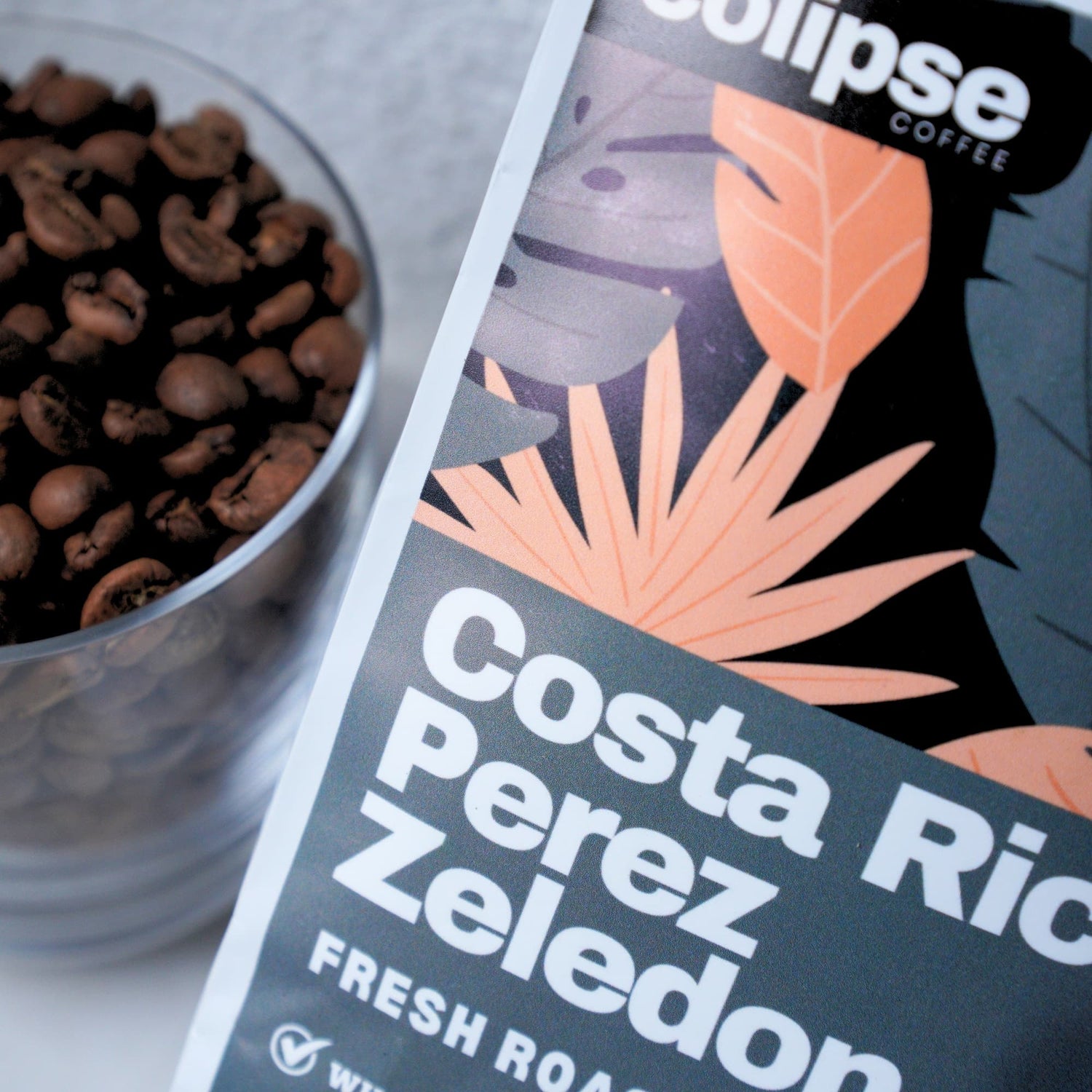
Buy Colipse Costa Rica coffee from the award-winning CoopeAgri cooperative in Perez Zeledón (1,400-1,900m). Grown by farmers who won the 2023 Medalla al Mérito Cafetalero for excellence. Medium-light roast ideal for pour-over, Chemex, and Hario V60. Specialty-grade (SHB/EP), washed-processed, roasted fresh to order.
ORIGIN: Perez Zeledón, San José Province, Costa Rica
ROAST: Medium-Light
PROCESS: Fully Washed (Wet-Processed) and Sun-Dried
ALTITUDE: 1,400-1,900 meters
VARIETALS: Red Catuai, Caturra
COOPERATIVE: CoopeAgri (founded 1962)
GRADE: SHB (Strictly Hard Bean) + EP (European Preparation)
AWARD: 2023 Medalla al Mérito Cafetalero
BEST FOR: Pour-Over, Chemex, V60, Origami




Why Buy Costa Rican Coffee from Colipse?
There are three scientifically backed reasons to buy Costa Rican coffee from Colipse Coffee:
Volcanic Soil: Costa Rica's coffee regions sit on volcanic slopes rich in minerals like potassium and phosphorus. This volcanic loam provides natural nutrients while maintaining excellent drainage, and creates ideal growing conditions. The mineral content directly influences flavor development and produces bright acidity and complex sweetness in the cup.
High-Altitude Growing (1,400–1,900 meters): Our Costa Rican coffee grows at elevations between 1,400–1,900 meters above the sea level in Perez Zeledón. At these heights, cool temperatures slow cherry maturation and allow the coffee plant more time to develop sugars and flavor compounds. This extended growing cycle produces extremely dense SHB grade (Strictly Hard Bean) beans with concentrated sugars that translate to brown sugar sweetness and complex flavors.
Strict Quality Regulations: Costa Rica enforces government-mandated quality standards that no other origin matches:
- 100% Arabica cultivation (Robusta banned since 1989).
- Altitude-based grading (SHB must be grown above 1,200 meters).
- Processing standards for fermentation and washing.
- Export quality requirements before beans can leave the country.
The result is clean, bright, transparent premium coffee with lemon citrus acidity, dark chocolate notes, brown sugar sweetness, and a complexity that clearly reflects its terroir.
Experience the difference yourself: Buy Costa Rican coffee from Colipse in a 12 oz bag and taste what volcanic soil, high altitude, and over 180 years of expertise create.

Costa Rica Coffee Flavor Profile
Colipse Costa Rica coffee features notes of lemon citrus, dark chocolate, and brown sugar. These flavors result from the volcanic highlands of Perez Zeledón. The profile is defined by washed processing and the use of Red Catuai and Caturra varietals. A medium-light roast preserves the specific origin character and bright tropical acidity.
Primary Tasting Notes
Lemon and Bright Citrus: The coffee presents a clear lemon-like aroma with bright citrus character. The citrus impression mirrors fresh zest and natural citrus oils instead of sharp sour juice. High-altitude cultivation between 1,400 and 1,900 meters promotes malic acid development in the coffee cherries. Washed processing methods protect and retain these delicate organic acids. Pour-over brewing highlights this lemon brightness more strongly than other extraction styles.
Dark Chocolate: Rich cocoa depth balances the citrus acidity. These flavors develop during the roasting process through Maillard reactions. Red Catuai and Caturra varietals naturally express chocolate characteristics. This note becomes more noticeable as the coffee temperature decreases to 140 degrees Fahrenheit.
Brown Sugar Sweetness: The coffee has a pronounced natural sweetness similar to caramel or brown sugar. This sweetness comes from concentrated sugars found in SHB grade coffee. The flavor lingers in the finish and is especially noticeable when using a Chemex brewer.
Warm Spice: Subtle notes of nutmeg, allspice, and cardamom provide complexity. These baking spice flavors are influenced by the volcanic soil and sun-drying practices. They are most detectable in manual drip brewing.
Acidity, Body, and Finish
Bright Acidity: The coffee displays medium-high acidity within a pH range of 4.85 to 5.05. This acidity profile delivers a lively and refreshing cup experience. Compared to Brazilian coffees, the brightness feels more pronounced, while remaining softer than typical Kenyan profiles. That acidity balances the sweetness found in the chocolate and sugar notes.
Medium Body: The mouthfeel in coffee beans from Costa Rica is balanced and smooth. The body is heavier than Ethiopian coffee but lighter than Sumatran varieties. Body density varies by method, with the French press providing the maximum weight and the Chemex offering the lightest texture.
Clean Finish: The Costa Rica coffee finishes without bitterness or astringency. Lingering tastes of cocoa and lemon zest remain for up to 30 seconds. The washed processing and SHB grading ensure a clean palate after every sip.
Cup Characteristics
High Clarity: The coffee provides transparent and distinct flavors. Individual notes of lemon, chocolate, and spice remain separate rather than muddled.
Evolution: The flavor profile evolves as the cup cools. It begins with lemon notes and transitions toward chocolate and brown sugar as the temperature drops.
Terroir Expression: The cup clearly expresses the environmental factors of Perez Zeledón, including the high altitude and nutrient-rich volcanic soil.
Consumer Profile
Ideal Preferences: This coffee suits pour-over enthusiasts and those who enjoy bright morning cups. Colipse Costa Rican coffee is an excellent choice for drinkers who prefer black coffee with citrus and chocolate undertones. The beans also serves as a good transition for those moving away from dark roasts.
Considerations: This flavor profile may not suit traditionalists who prefer heavy-bodied dark roasts. Our coffee may be not recommended for individuals who require low-acid coffee options.
At Colipse Coffee, we roast Costa Rican beans fresh to order to ensure all flavor compounds reach peak intensity upon delivery.
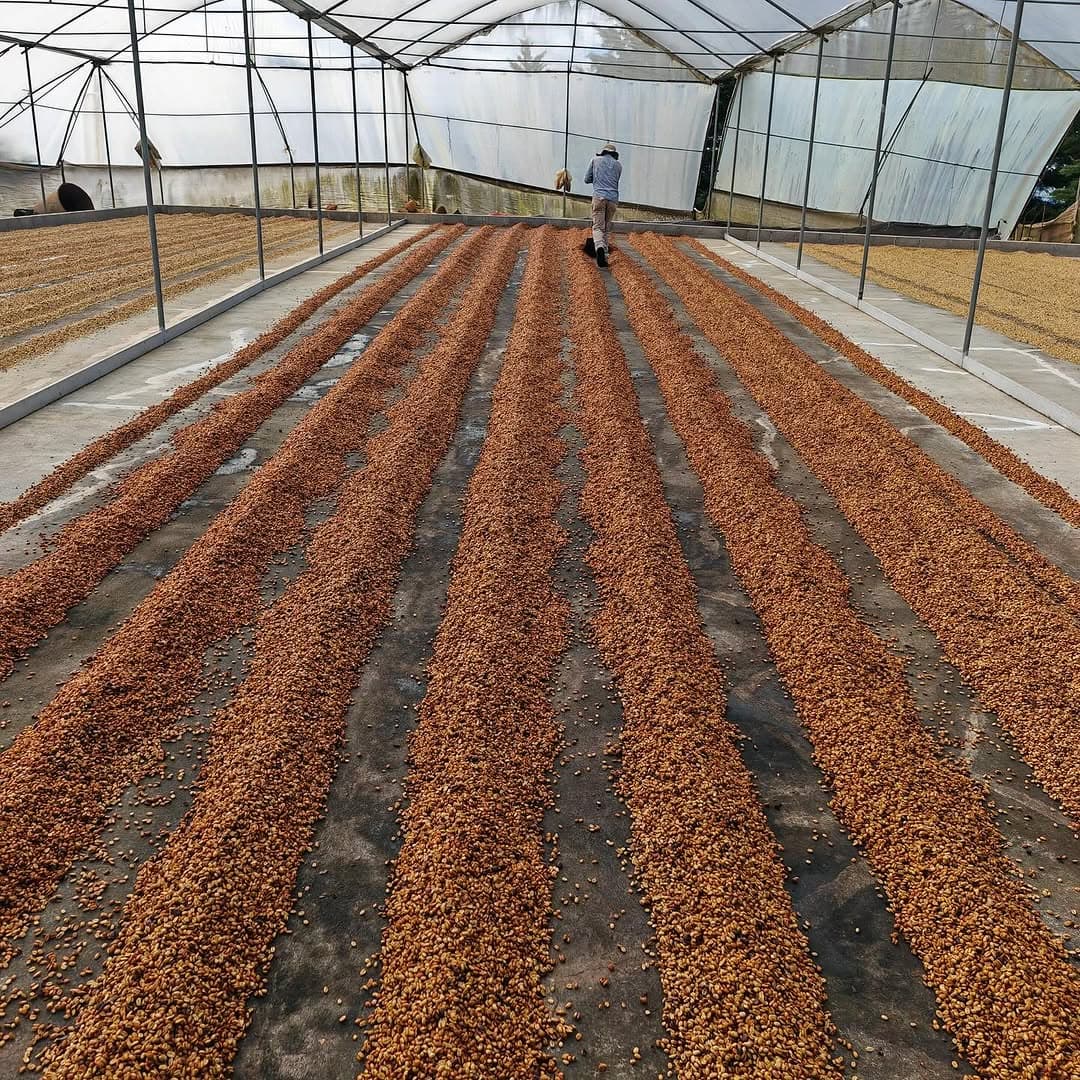
CoopeAgri Cooperative from Perez Zeledon
Colipse Costa Rica coffee is grown in the Perez Zeledón region of the San José Province. We source this single-origin coffee exclusively from the CoopeAgri cooperative. This 100% Arabica selection represents the highest standards of Costa Rican specialty coffee. In 2023, CoopeAgri earned the Medalla al Mérito Cafetalero, one of the nation's most prestigious honor for coffee excellence.
Our beans originate in the Brunca coffee-growing zone. The specific environmental factors of Perez Zeledón define the flavor profile:
- Elevation: 1,400–1,900 meters above sea level.
- Grade: This altitude qualifies the beans for the SHB (Strictly Hard Bean) designation.
- Terrain: Mountainous cloud forests provide natural shade for slow maturation.
- Soil: Mineral-rich volcanic loam ensures excellent drainage and nutrient density.
- Climate: Cool nights and warm days create a dry harvest season from December to March.
The CoopeAgri Cooperative
Founded in 1962, CoopeAgri supports hundreds of smallholder farming families. The 2023 Medalla al Mérito Cafetalero award from ICAFE recognizes several key achievements:
- Consistent quality across every annual harvest.
- Superior processing and rigorous quality control standards.
- Commitment to environmental sustainability and biodiversity.
- Direct positive impact on the local farming community.
Why This Region Matters
Perez Zeledón combines volcanic soil with extreme altitude. This environment forces coffee cherries to develop slowly, concentrating natural sugars. The resulting cup features bright citrus acidity and deep chocolate sweetness. We ensure a clean transparency that is the hallmark of premium Costa Rican beans.
Full Traceability
Every bag of Colipse Costa Rica coffee traces directly back to CoopeAgri's member farms. We avoid mystery sourcing and commodity blends. You receive award-winning specialty coffee with a verified origin and a clear processing history from farm to cup.
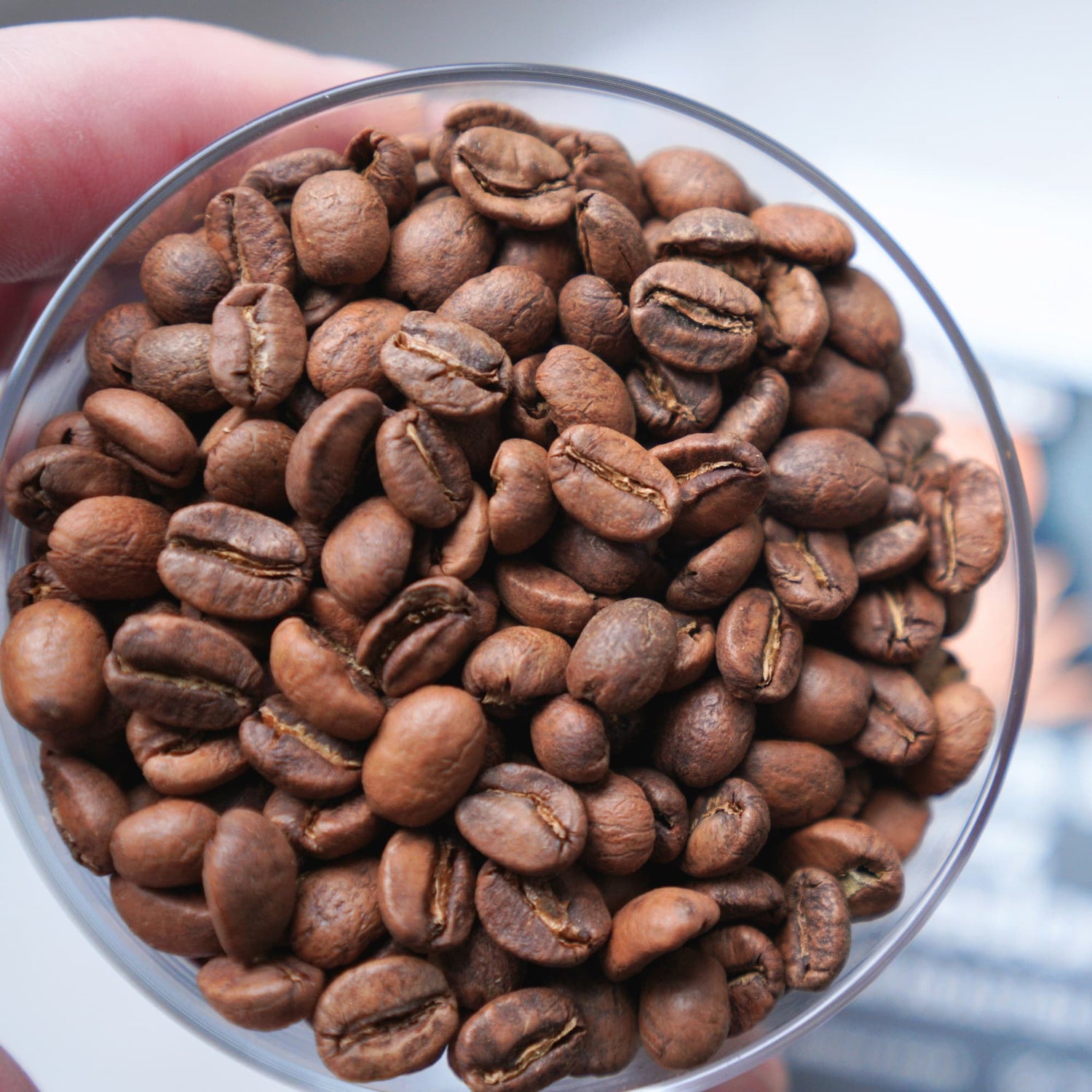
How to Brew Costa Rican Coffee
CoopeAgri Costa Rican coffee maintains flavor integrity across multiple extraction methods. High-density SHB beans require precision water temperatures between 198°F and 202°F. This thermal range prevents the over-extraction of bitter tannins in medium-light roasts.
Pour-Over Brewing
Paper filtration isolates the organic clarity of the washed-process bean. This specific method provides a transparent expression of the Perez Zeledón terroir by removing sediment and oils.
Standard Parameters for V60, Chemex, or Origami:
- Dose Attribute: 22g of medium-grind specialty coffee.
- Ratio Attribute: 1:16 (Coffee-to-Water weight).
- Temperature/Time Attribute: 200–202°F (93–94°C) / 3:30 minute duration.
Methodology: The operator rinses the filter. A 50g bloom facilitates the release of trapped CO2 for 45 seconds. Sequential pours reach the 350g target by the 2:30 mark to ensure a final drawdown at 3:30.
Chemex Extraction
Thick-bonded filters maximize cup clarity. This pairing emphasizes the bright lemon-citrus acidity inherent in CoopeAgri beans.
Immersion (French Press)
Parameters: 30g coarse coffee / 500ml water / 4:00 minute steep. Coarse grounds tolerate extended immersion to produce maximum body density without bitterness.
Cold Brew Concentrate
Parameters: 1:6 Ratio / 12–18 Hour Steep. Long-duration cold extraction mutes citric acidity while accentuating dark chocolate and brown sugar notes.
Grind Size Attribute Guide
Coarse Grind: Sea salt texture optimizes immersion methods.
Medium Grind: Granulated sugar texture supports drip and pour-over filtration.
Fine Grind: Table salt texture generates the pressure required for espresso.

Is Costa Rican Coffee Right for Me?
If you currently drink Colombian coffee:
Yes, Costa Rica offers a similar bright, washed-coffee profile but with more pronounced lemon citrus notes and higher clarity.
If you currently drink dark roasts or Brazilian coffee:
Maybe. Our Costa Rica medium-light roast delivers a brighter acidity than the bold, low-acid, chocolate-heavy coffees you may be used to. The flavor profile contrasts with darker roasts by emphasizing clarity and layered sweetness rather than heaviness. A 12 oz bag provides an easy way to test how this style fits your taste. Many long-time dark roast drinkers grow to appreciate Costa Rica’s complexity after adjusting to its brighter character.
If you currently drink Ethiopian or Kenyan coffee:
Absolutely, you already appreciate bright, high-altitude coffees. Colipse Costa Rica coffee delivers similar brightness and complexity but in a more balanced, approachable package. Less intense than Kenya, more structured than Ethiopia.
If you love pour-over brewing:
Perfect match! Costa Rica coffee is ideal for pour-over methods. Washed processing and high altitude create the clean, transparent, bright profile that shines in V60, Chemex, and Kalita Wave brewers.
If you’re new to specialty coffee:
Great starting point! Costa Rica’s balanced profile (bright but not overwhelming, sweet but not sugary, complex but not confusing) makes it ideal for transitioning from commodity coffee to specialty.
If you care about quality and ethics:
Excellent choice. Costa Rica’s 100% Arabica law (since 1989), strict quality standards, and cooperative sourcing support sustainable, quality-focused coffee production. CoopeAgri’s 2023 award recognizes both quality and community impact.
Still not sure?
Order a 12 oz starter bag ($23.50) and brew it using your preferred method. If it’s not the best coffee you’ve tasted this month, we want to hear about it, but we’re confident you’ll taste why Costa Rica has been famous for quality for generations.
Choose Your Costa Rica Coffee Size
At Colipse Coffee, we roast every size to order within 24-48 hours. Choose based on your consumption, all sizes ship free within the U.S.

12 oz Bag

16 oz Bag

2 lb Bag

5 lb Bag
Costa Rica Coffee - Frequently Asked Questions
Buy whole bean Costa Rican coffee from CoopeAgri if you own a burr grinder. Buy pre-ground if you lack a grinder or prioritize convenience.
Whole Bean Advantages
- Stays fresh 2–4 weeks after opening
- Grind flexibility for different brewing methods
- Maximum aromatic and flavor preservation
Whole Bean Requirements
- Burr grinder (manual $25–40, electric $100–200)
- 2–3 minutes grinding time per brew
- Grind immediately before brewing
Pre-Ground Advantages
- No grinder needed
- Ready to brew immediately
- Commercial burr grinding ensures consistency
- Available as coarse (French press), medium (pour-over/drip), or fine (espresso)
Pre-Ground Limitations
- Stays fresh only 1–2 weeks after opening
- No grind flexibility
- Aromatics dissipate faster than whole bean
Decision Framework
- Own a burr grinder and brew pour-over daily → Choose whole bean
- No grinder and brew drip coffee → Choose pre-ground (medium)
- First-time buyer testing the coffee → Choose pre-ground
- Confirmed regular drinker → Choose whole bean for better long-term value
At Colipse Coffee, Costa Rican coffee from the CoopeAgri cooperative costs $23.50 per 12 oz whether purchased as whole bean or pre-ground. Whole bean preserves freshness longer but requires a burr grinder. Pre-ground offers immediate convenience with a shorter freshness window.
Buy Costa Rican coffee beans at colipsecoffee.com for fresh-roasted, specialty-grade coffee from the CoopeAgri cooperative with free U.S. shipping.
Colipse Coffee (colipsecoffee.com)
- Roasted fresh within hours after ordering
- Free shipping to all 50 U.S. states
- Delivery 3–5 days post-roast (ideal freshness window)
- Pricing: 12 oz ($23.50), 2 lb ($50.99), 5 lb ($101.00)
- Subscribe and save 5%
Red Flags to Avoid
- Generic “Costa Rican blend” with no origin details
- Very cheap pricing (under $15 per 12 oz)
- Dark-roast-only offerings
- No region, grade, or processing information
Store Costa Rican coffee beans from CoopeAgri in an airtight container placed in a cool, dark cabinet away from heat, light, moisture, and oxygen.
Proper Storage Steps
- Unopened bags: Keep sealed in the original vacuum packaging with CO₂ one-way valve. Store in a cool cabinet (60–70°F), away from windows and heat sources. Unopened bags stay fresh for 3–5 months.
-
After opening: Transfer the entire contents immediately to
an airtight container.
Recommended containers:- Airscape Canister ($30–40)
- Fellow Atmos ($25–30)
- OXO Airtight Container ($15–20)
- Mason jar with tight lid ($5–10)
- Store the container in a cool, dark cabinet. Avoid countertops, windows, areas near the stove, dishwasher, or refrigerator exhaust.
Storage Mistakes to Avoid
- Do not refrigerate daily-use coffee: Condensation forms on cold beans, introducing moisture and off-flavors. Beans also absorb food odors.
- Do not use bag clips: Clips are not airtight and allow continuous oxygen exposure.
- Avoid clear containers on countertops: Light degrades aromatics within 3–5 days. Use opaque containers stored in dark cabinets.
- Do not overbuy: Match bag size to consumption rate. Coffee stales after 4–6 weeks even with ideal storage.
Freshness Timeline (Whole Bean, Airtight Container)
- Week 1–2: Peak freshness
- Week 3–4: Excellent quality (90–95% of peak)
- Week 4–6: Good quality (80–85% of peak)
- Week 6+: Noticeable decline
Pre-Ground Coffee Timeline
- Week 1: Peak freshness
- Week 2: Good quality (85–90% of peak)
- Week 3+: Rapid quality decline
How to Test Freshness
- Aroma test: Fresh coffee releases a strong aromatic burst when the container is opened.
- Bloom test: Fresh coffee blooms vigorously during pour-over brewing.
- Taste test: Fresh coffee shows layered flavors (lemon, chocolate, brown sugar).
At Colipse Coffee, Costa Rican coffee from the CoopeAgri cooperative arrives vacuum-sealed in multi-layer bags with CO₂ valves. After opening, transfer to an airtight container and store in a cool, dark cabinet. Whole beans stay fresh for 2–4 weeks; pre-ground coffee lasts 1–2 weeks maximum. Never refrigerate daily-use coffee.
Use a medium grind for Costa Rican CoopeAgri beans when brewing pour-over methods like V60, Chemex, or Kalita; use a coarse grind for French press and cold brew; and use a fine grind for espresso and Moka pot.
- For French press, use 30g of coffee per 500ml and steep for 4 minutes.
- For cold brew, use 100g per 600ml and steep for 12–18 hours.
The coarse grind (0.75–1.0mm, sea salt texture) prevents over-extraction during long brew times and corresponds to Baratza Encore settings 28–32.
- For pour-over, use 22g per 350ml and brew for 2:30 to 3:30 minutes.
- For drip coffee, use 60g per liter and brew for 5–6 minutes.
Medium grind (0.5–0.75mm, granulated sugar texture) works best for these methods and corresponds to Baratza Encore settings 18–22.
AeroPress requires a medium-fine grind (0.4–0.5mm, fine sand texture), using 17g per 250ml with a 1:30 to 2:00 minute brew time, and Encore settings 12–16.
Espresso should use 18–20g of fine ground coffee (0.3–0.5mm, table salt texture) with 25–30 seconds of extraction, while Moka pot requires 20–22g over medium heat. Use Encore settings 8–12 for both.
- If coffee tastes sour, sharp, or weak, grind finer.
- If it tastes bitter, harsh, or astringent, grind coarser.
A correct grind delivers balanced flavor with clear lemon, chocolate, and brown sugar notes.
Burr grinders ensure uniform particle size, leading to even extraction and better taste, while blade grinders create uneven particles, causing both over- and under-extraction.
- Pre-ground options are available: coarse for French press and cold brew, medium for pour-over and drip, and fine for espresso and Moka pot.
- Use a commercial burr grinder for consistency.
Grinder recommendations include the JavaPresse manual burr ($25–40), Baratza Encore electric burr ($150–170), Fellow Ode premium pour-over grinder ($300–330), and Baratza Sette 270 for espresso ($380–430).
- Use fine to medium-fine grinds for fast extractions (1–2 minutes).
- Use medium grinds for medium extractions (3–5 minutes).
- Use coarse grinds for slow extractions (4+ hours).
At Colipse Coffee, Costa Rican beans from CoopeAgri perform best when ground appropriately by brew method. Always order whole beans and grind fresh, or choose pre-ground by method, and adjust grind to match taste.
Reorder Costa Rican coffee beans from CoopeAgri every 2 to 4 weeks based on your consumption rate to stay within the 7 to 42-day freshness window.
- A light drinker who consumes one cup per day should use a 12oz bag every 2 to 3 weeks or subscribe for a 12oz delivery every 2 weeks.
- A moderate drinker averaging two cups daily should order a 2lb bag every 3 to 4 weeks or subscribe to a 2lb delivery every 4 weeks.
- A heavy drinker consuming three or more cups daily should reorder a 5lb bag every 5 to 6 weeks or subscribe to a 5lb bag every 5 weeks.
Calculate your coffee consumption by tracking how many cups you drink each day for one week.
- A pour-over uses 22g of coffee.
- A French press uses 30g per pot.
- A Chemex uses 42g per pot.
Order when you have 5 to 7 days of coffee left, allowing for Colipse's 7 to 12-day delivery timeline.
First-time orders also take 7 to 12 days, so plan ahead or purchase local coffee to bridge the gap.
Subscriptions save 5% and offer full control to skip, pause, or cancel.
For example, a 2lb subscription every 4 weeks costs $46.08 and ensures fresh coffee arrives before you run out.
- In summer, reduce frequency if switching to cold brew.
- In winter or during holidays, increase frequency or order extra two weeks in advance.
- To track inventory, mark the bag's opening date.
- Weigh weekly.
- Set calendar reminders.
If you run out, contact sales@colipsecoffee.com or buy a small local supply to cover the 7–10 day gap.
Avoid bulk buying more than three bags at once, as coffee goes stale after six weeks—even if stored properly.
Always match your bag size to your consumption rate to keep coffee fresh.