Is Decaf Coffee Acidic? Low-Acid Options and Best Beans
Updated - Team Colipse
Decaf coffee retains natural acidity from the original beans despite having most caffeine removed. The decaffeination process affects acid levels, but the result depends on the method used, the roast profile, and the bean origin. This means decaf is not automatically the low-acid alternative many people assume.
Several strategies can reduce acidity further, from choosing specific decaffeination methods to adjusting brewing techniques. People with acid reflux or GERD benefit from understanding which options minimize digestive irritation. The type of bean, roast level, and brew method each play a distinct role in the final acidity of your cup.
Is Decaf Coffee Acidic?
Yes, decaf coffee is slightly less acidic than regular coffee, but it remains an acidic beverage overall. The pH difference between the two is small, placing both types in the same general range on the acidity scale. The decaffeination process reduces acidity to a minor degree. This reduction remains modest in scope.
Coffee acidity refers to two distinct concepts that often create confusion. The first involves perceived flavor brightness. The second refers to actual pH measurement, where coffee ranks 4-5 on the scale. This ranking makes coffee less acidic than apples at pH 3-4. The following graphic explains flavor acidity versus measured pH acidity in coffee.

Decaf coffee contains chlorogenic acids, melanoidins, and polyphenols throughout its composition. The decaffeination process reduces acid levels slightly. These acidic compounds persist in decaf coffee at levels not dramatically different from regular coffee.
A 2018 study by Stephen Hall in Beverages analyzed caffeic, chlorogenic, and ferulic acid levels across nine regular and nine decaffeinated coffee samples from Australian brands. No significant differences in acid concentrations emerged between the two types. The finding confirms that decaffeination leaves acidity-contributing compounds largely intact.
Decaf and regular coffee differ across several key acidity metrics.
| Attribute | Decaf Coffee | Regular Coffee |
|---|---|---|
| pH level | 5.0 | 4.7 |
| Chlorogenic acid content | Slightly reduced (3–9% loss) | Full baseline |
| Perceived flavor acidity | Lower brightness | Higher brightness |
| Stomach irritation risk | Lower | Higher |
| Recommended for reflux | Yes, with precautions | Not recommended |
Does Decaf Coffee Have Acidity?
Yes, decaf coffee retains baseline acidity from the original beans because chlorogenic acids and other acidic compounds remain present after the decaffeination process. The removal of caffeine does not eliminate these naturally occurring acids. Decaf beverages maintain measurable acidity levels similar to their caffeinated counterparts. A 2008 analysis by Adriana Farah in The Journal of Nutrition found that decaffeination processes retain most chlorogenic acids with only 3–9% losses, confirming that decaf's acid profile remains largely comparable to regular coffee.
The decaffeination process involves soaking green beans and stripping away compounds to reduce caffeine content. This soaking and stripping action removes some acidic compounds, including chlorogenic acids. However, the procedure does not eliminate all acidity from the beans. Significant acid levels remain intact.
According to comprehensive reviews from the Linus Pauling Institute at Oregon State University, chlorogenic acid levels in decaf remain comparable to regular coffee, contributing to both acidity and antioxidant benefits. For most drinkers, the bean and roast influence stomach impact more than the decaffeination step itself.
Decaf coffee is generally easier on the stomach than regular coffee, as research and customer reports confirm. Sensitive individuals may still experience digestive issues from decaf coffee due to its residual acidity. The reduced but present acid content makes decaf a gentler option for acid-sensitive people.
Is Decaf Coffee Less Acidic Than Regular Coffee?
Decaf coffee registers at a pH of 5.0, making it slightly less acidic than regular coffee at pH 4.7. The difference between these two values amounts to only 0.3 on the pH scale. This modest reduction is insufficient to provide meaningful relief for individuals with truly sensitive stomachs or acid reflux conditions.
A 2008 study by Keiko Fujioka in Food Chemistry measured pH levels across eight regular and seven decaffeinated brewed coffees. Decaf samples exhibited higher average pH than regular coffee, confirming a slightly milder acid profile. Chlorogenic acid levels remained similar or slightly lower in decaf, accounting for the modest difference.

The decaffeination process reduces acidity through mechanical and chemical methods. Thermo Fisher Scientific's Dionex study revealed that chemical solvents, liquid CO2, and water filtration extract caffeine while simultaneously removing certain acidic compounds. These extraction techniques account for the slightly lower acid profile in decaffeinated coffee compared to its caffeinated counterpart.
Bean variety and roast level determine decaf acidity more significantly than caffeine removal alone. Light roasts tend to retain more acids than dark roasts, regardless of caffeine content. Therefore, not all decaffeinated coffees qualify as low-acid options. Selection depends on roast profile rather than decaffeination status.
How Does Decaffeination Affect Coffee Acidity?
Decaffeination slightly reduces coffee acidity by removing caffeine and some organic acids during solvent, Swiss Water, or CO₂ processing. These processes preserve original flavor but do not significantly reduce bean acidity. They target caffeine removal while maintaining the taste profile consumers expect. The fundamental challenge remains balancing caffeine extraction with acid retention in the final product.
According to research from the Max Planck Institute, supercritical CO₂ decaffeination, which they pioneered, selectively extracts caffeine while retaining acids like chlorogenic and caffeic acid, processing over 100,000 tons of coffee annually. The method's precision explains why CO₂-decaffeinated coffee tastes similar to regular but carries a slightly milder acid profile.
Decaffeination creates minor changes in chemical composition. These changes subtly impact perceived acidity. Chlorogenic acids undergo reduction during treatment. This reduction shifts the overall acid profile in ways that influence taste perception and potential digestive effects. A 2023 study by Rika Rahmawati in AIP Conference Proceedings confirmed that extended decaffeination progressively reduces pH, total acid, and chlorogenic acid levels in arabica beans.
Bean selection for decaffeination reveals an ironic pattern in coffee production. Producers choose beans already higher in acidity because acidic beans retain flavor better after treatment. Most decaf coffees consequently contain higher acid levels than consumers might expect from their lower-caffeine profile. A 2024 analysis by Jae Park in ACS Food Science & Technology found that decaf retained or slightly elevated certain acidity-related compounds compared to regular coffee, supporting this counterintuitive pattern.
Does the Decaffeination Process Reduce Acid?
Yes, decaffeination process removes some acidic compounds, including chlorogenic acids. This removal results in lower acid levels than regular coffee. Soaking and stripping methods strip away caffeine molecules while simultaneously eliminating some of the organic acids naturally present in coffee beans. This dual elimination mechanism produces a final beverage with measurably reduced acidity compared to standard coffee.
A 2021 study by Hotman Sinaga in IOP Conference Series: Earth and Environmental Science measured the effects of decaffeination duration on robusta green beans. Longer decaffeination times progressively reduced caffeine, chlorogenic acid, total acid, and pH levels. The results demonstrate that the extraction process lowers overall bean acidity relative to untreated coffee.
The Swiss Water Process preserves beneficial antioxidants better than solvent-based decaffeination methods. This water-only filtration technique maintains chlorogenic acids and polyphenols that other chemical processes strip away. The preservation of these compounds makes Swiss Water Process decaf a superior choice for those seeking both lower caffeine and antioxidant retention.
Roasting decaffeinated beans triggers additional acid reduction beyond the initial decaffeination stage. Heat application causes chemical transformations in already-processed beans. These transformations further break down chlorogenic acids. The roasting phase compounds the reduction benefits established during the soaking and stripping process.
Which Decaffeination Method Produces the Lowest Acidity?
The Swiss Water Process produces the lowest acidity among decaffeination methods. This method uses only water filtration without chemical additives. This approach removes caffeine while preserving beneficial antioxidant compounds that chemical methods eliminate. Water-based filtration represents the purest decaffeination pathway available to consumers seeking both lower acid coffee and maximum nutritional retention.
Mountain Water Process decafs utilize 100% organic ingredients and water-only filtration to reduce acidity while preserving chlorogenic acids and polyphenols. These naturally occurring compounds remain intact throughout the process. The result delivers a chemically untreated coffee with measurably lower acidity than conventional decaffeination approaches.
Water-based filtration methods remove substantially more acidic compounds than chemical solvent or liquid CO2 alternatives. Swiss Water and Mountain Water processes maintain superior flavor profiles while achieving greater acid reduction. Chemical and CO2 methods, by contrast, leave higher residual acidity in the final product despite their effectiveness at caffeine removal.

According to research from the UC Davis Coffee Center, water-based decaffeination methods preserve bioactive compounds while achieving superior acid reduction compared to chemical solvent approaches. The science confirms what many sensitive stomachs already know — not all decaf processes are created equal.
Each decaffeination method affects acidity and compound retention differently.
| Characteristics | Swiss Water Process | CO₂ Extraction | Chemical Solvents |
|---|---|---|---|
| Acidity level | Lowest | Moderate | Moderate–High |
| Antioxidant retention | Highest | Moderate | Lower |
| Chemical residues | None | None | Possible |
| Flavor preservation | Excellent | Good | Variable |
| Best suited for | Low-acid needs | Specialty production | Commercial production |
Is Decaf Coffee Safe for Acid Reflux?
Decaf coffee produces significantly less acid reflux than caffeinated coffee in both people with and without reflux diseases. Multiple studies demonstrate that switching to decaf reduces heartburn occurrence and severity. This reduction supports decaf as a safer alternative for individuals managing GERD symptoms.
A 1997 study by Christian Pehl in Alimentary Pharmacology & Therapeutics measured gastro-oesophageal reflux in 20 patients with reflux disease after consuming regular or decaffeinated coffee. Regular coffee produced a median reflux fraction of 17.9%, while decaf reduced this to 3.1%. The substantial reduction confirms that decaffeination significantly lowers reflux severity in vulnerable patients.

Decaf coffee reduces heartburn symptoms in GERD patients by stimulating less bile secretion. This milder digestive effect lowers the overall acid production that triggers reflux episodes.
Decaf coffee is safer than regular coffee for acid reflux, but acidity rather than caffeine represents the bigger problem. Not all reflux sufferers tolerate decaf well. Chlorogenic acid and other naturally occurring acids in coffee remain present in decaffeinated versions.
Several factors determine whether decaf is safe for your reflux condition, as shown in the diagram below.

- Caffeine removal: Decaf significantly reduces reflux episodes compared to regular coffee.
- Residual acidity: Chlorogenic acids and other compounds remain and may still trigger symptoms.
- Roast selection: Dark roasts contain fewer acid compounds than light roasts.
- Brewing method: Cold brew reduces acidity compared to hot brewing methods.
- Individual tolerance: Severe GERD sufferers may need to avoid all coffee despite decaf's improved profile.
Does Decaf Coffee Cause Heartburn?
Decaf coffee can still cause heartburn for some people because residual acidity and other compounds remain in the beverage despite caffeine removal. The heartburn risk from decaf coffee is significantly lower than regular coffee, but the potential for reflux symptoms persists in susceptible individuals.
Researchers at Alimentary Pharmacology and Therapeutics published a 1994 study examining decaffeinated coffee's effect on gastro-oesophageal reflux. The study results demonstrated that decaffeination reduces reflux episodes substantially. This reduction was incomplete. Some reflux episodes still occurred even with decaffeinated beverages.
Coffee's acidity and other chemical components trigger reflux independently of caffeine content. Chlorogenic acids, quinides, and other compounds in coffee beans contribute to lower esophageal sphincter relaxation. These substances remain present in decaffeinated coffee, making it a potential heartburn trigger for sensitive individuals.
Does Decaf Coffee Trigger GERD?
Decaf coffee can trigger GERD, though significantly less than regular coffee. Clinical studies comparing reflux symptoms between caffeinated and decaffeinated coffee demonstrate that removing caffeine reduces GERD episodes. However, the relationship between decaf coffee and GERD is not simple, and decaf is not a complete solution for acid reflux sufferers.
Dr. Jamie Koufman identifies coffee's pH level as a more critical GERD trigger than caffeine content. The beverage's acidity irritates the esophageal lining regardless of caffeine presence. This distinction explains why some decaf drinkers still experience reflux symptoms after consumption.
Many decaffeinated coffees retain high acidity levels that damage the esophageal lining similarly to caffeinated varieties. The decaffeination process does not neutralize the acidic compounds responsible for irritation. GERD sufferers must evaluate both caffeine content and overall pH when selecting coffee options.
Is Decaf Better for Acid Reflux Than Regular Coffee?
Decaf coffee is significantly better for acid reflux than regular coffee, producing less reflux in both GERD patients and those without the condition. Research demonstrates that the caffeine content in regular coffee substantially increases acid reflux symptoms. Switching to decaffeinated options provides a practical solution for coffee lovers who experience reflux complications.
According to meta-analyses from the Harvard T.H. Chan School of Public Health, decaf coffee's milder acidity profile provides measurable digestive health benefits compared to regular coffee. If reflux has been keeping you from your morning cup, decaf may be the practical workaround.
Cleveland Clinic experts recommend transitioning to decaf, particularly dark roast or cold brew varieties, to minimize reflux triggers while maintaining coffee consumption. Dark roast decaf contains lower acid levels than lighter roasts. Cold brew preparation further reduces acidity by approximately 67 percent compared to hot brewing methods. This additional protective strategy benefits sensitive individuals.
Decaf coffee provides an advantage for reflux-sensitive individuals but does not completely eliminate acidity from coffee beans themselves. This baseline acidity remains present in decaffeinated beverages. Severe reflux sufferers may require complete coffee avoidance despite decaf's improved profile, as even reduced-acid options can trigger symptoms in some patients.
How Can You Reduce Acidity in Decaf Coffee?
Reducing acidity in decaf coffee requires a multi-strategy approach that combines bean selection, roasting methods, and brewing techniques. Implement three core strategies: choose water-processed decaf, select darker roasts, and use low-acid brewing methods like cold brew. This combination directly addresses the chemical and physical factors that contribute to stomach discomfort.

Low-acid coffee beans from specific growing regions offer a natural solution. Beans cultivated at lower altitudes in tropical climates develop fewer acidic compounds during growth. These regional selections reduce the acid content that reaches your stomach.
The roasting process significantly impacts acidity levels in decaf coffee. Slow roasting at higher temperatures for longer durations breaks down acid compounds more effectively than standard roasting. Extended heat exposure naturally reduces the final acidity of your brewed cup without chemical additives.
Reducing acidity in decaf coffee comes together in five straightforward steps.
- Select water-based decaf: Choose beans processed through water filtration methods that remove more acidic compounds than chemical alternatives.
- Pick dark roast profiles: Opt for dark or medium-dark roasts where prolonged heat has broken down chlorogenic acids and other irritants.
- Source low-altitude beans: Tropical low-elevation origins naturally contain fewer acidic compounds than high-altitude varieties.
- Brew with cold water: Use cold brew extraction over 12–24 hours to minimize the release of acids that dissolve readily at higher temperatures.
- Add dairy or milk alternatives: Proteins in milk bind with acidic compounds, neutralizing their impact on your stomach and palate.
Does Dark Roast Decaf Have Less Acid?
Yes, dark roast decaf coffee contains significantly lower acidity than lighter roasts because prolonged heat exposure breaks down and caramelizes naturally occurring acids. This thermal transformation produces a smoother, more mellow brew. The extended roasting process chemically alters the bean's acid structure. This change reduces the overall pH and creates a gentler beverage for sensitive stomachs.
Light roasts preserve bright, citrus-like acidic flavors that characterize their flavor profile. Dark roasts undergo flavor transformation during the roasting process. The resulting brew exhibits nutty, chocolatey, and dried fruit sweetness notes. This flavor shift directly corresponds to reduced acid content in the final cup.
Food Science Journals confirm that slow roasting at higher temperatures reduces coffee acidity most effectively. Extended roasting times allow heat to penetrate the bean deeply. This prolonged exposure systematically breaks down acid compounds. Temperature control during this extended process ensures maximum acid reduction without burning the beans.
Does Cold Brewing Lower Decaf Coffee Acidity?
Yes, cold brew decaf contains up to 60% less acidity than hot brew coffee due to extended cold extraction over 12-24 hours, which minimizes the release of acidic compounds like chlorogenic acids. This significant reduction makes cold brew decaf an excellent choice for individuals with sensitive stomachs or acid reflux concerns.
Cold brewing minimizes extraction of acidic compounds that dissolve more readily at elevated temperatures. The low-temperature extraction process produces a smoother, less tangy taste profile. This gentle method preserves the coffee's natural flavors while reducing harsh, acidic notes.
Scientific Reports published a study demonstrating that cold brew coffee contained lower acid levels than hot brew. The research attributed this difference to the slow cold extraction process. This finding provides evidence-based support for cold brewing as an acidity-reduction technique.

Can Adding Milk Reduce Coffee Acidity?
Yes, adding milk to coffee reduces acidity through a neutralization mechanism where dairy proteins bind with acidic compounds in the beverage. This protein-based interaction diminishes the overall acidic impact on the palate, making the coffee taste less sharp and more balanced. This effect is particularly noticeable in acidic coffee varieties.
Natural fats present in milk create a creamy texture that balances tangy notes effectively. The fat molecules coat the mouth and throat, providing a richer and more harmonious flavor profile. This sensory richness masks acidic sharpness without altering the coffee's fundamental chemical composition.
A splash of milk or cream enhances smoothness by neutralizing acidic compounds directly. The dairy proteins and fats work together to reduce perceived acidity substantially. Regular coffee drinkers with acid sensitivity experience significant relief when incorporating milk into their daily routine.
Is There Such Thing as Acid-Free Decaf Coffee?
No truly acid-free decaf coffee exists because all coffee beans contain natural acidic compounds inherent to their chemical composition. Low-acid decaf options can minimize digestive discomfort significantly through specialized processing methods. Consumers seeking gentler coffee should focus on products labeled 'low-acid' rather than searching for impossible acid-free alternatives.
Coffee labeled 'low-acid' has reduced but not eliminated acidity. This distinction is important. Acid-free coffee does not exist as a natural product because acidity is an inherent characteristic of coffee beans. Understanding this terminology helps consumers make informed choices about their coffee selection.
Combining water-based decaffeination, dark roasting, and cold brewing can reduce acidity dramatically compared to conventional preparation. This multi-method approach represents the maximum achievable reduction currently available. Complete acidity elimination remains impossible due to coffee's fundamental chemical nature.
Which Coffee Beans Are Naturally Low in Acid?
Sumatra coffee beans produce naturally low-acid coffee with earthy and herbal flavors due to wet-hulling processing and tropical low-altitude growing conditions. The wet-hulling method removes the coffee cherry before drying. This removal reduces acid development during fermentation. The processing technique, combined with Sumatra's humid climate, creates beans that are gentler on the digestive system.
Brazilian coffee beans deliver nutty and chocolatey flavor profiles with lower acidity due to the nation's lower-altitude farms and consistently warm climate. Brazil's ideal growing conditions produce beans that naturally contain fewer acidic compounds. These characteristics make Brazilian coffee a reliable choice for acid-sensitive coffee drinkers.
Arabica beans have lower perceived acidity and smoother flavor profiles compared to Robusta beans. They suit individuals with sensitive stomachs better. Arabica's chemical composition naturally produces less harsh acidity. This distinction makes Arabica varieties the preferred option for those seeking gentler coffee experiences.
Each low-acid bean origin serves a different flavor and acidity purpose.
- Sumatra: Earthy and herbal flavors from wet-hulling processing at low tropical altitudes.
- Brazil: Nutty and chocolatey profiles from lower-altitude farms with warm, consistent climates.
- Arabica varieties: Smoother acid profiles and gentler flavor compared to Robusta cultivars.
What Should You Look for When Choosing Low-Acid Decaf?
Selecting low-acid decaf requires attention to three key factors: the decaffeination process, the roast profile, and the bean origin. Water-based process methods preserve minimal acidity. Dark roast profiles naturally reduce acid compounds. Beans sourced from low-altitude regions contain inherently lower acid levels than high-altitude varieties.
Verify the decaffeination method directly on the label before purchasing. Water-based processes eliminate caffeine without chemical solvents. Chemical solvent extraction leaves residual compounds that increase acidity. This label transparency ensures you consume truly low-acid decaf coffee.
Brewing method significantly impacts final acidity levels in your cup. Paper filter systems remove coffee oils that contribute to acidity and cholesterol content. Metal screens allow oils to pass through into the beverage. Pour-over, AeroPress, and standard drip makers with paper filters deliver the lowest-acid cup.
Where Can You Buy Low-Acid Decaf Coffee?
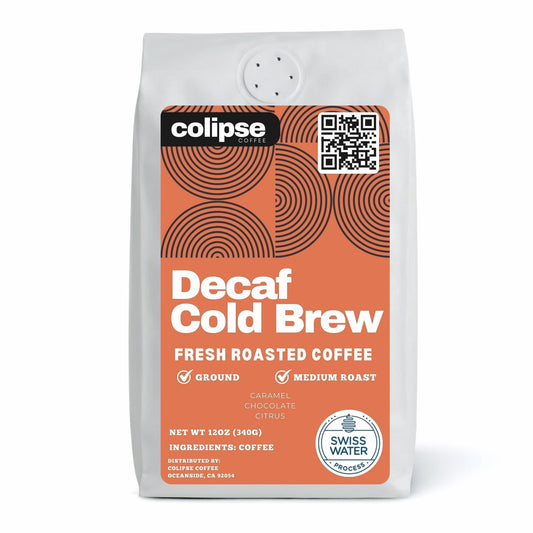
Buy low-acid decaf coffee from specialty coffee brands such as Colipse Coffee, which sells Swiss Water® Process decaf beans with 99.9% caffeine removal and reduced acidity. Specialty roasters roast beans after ordering and ship within 3–5 days, providing fresher coffee than most grocery-store decaf options.
Does Colipse Coffee Offer Low-Acid Decaf Options?
Yes, Colipse Coffee offers low-acid decaf options specifically formulated for customers with acid sensitivity and GERD concerns. Options include decaf espresso, decaf cold brew, medium roast decaf, dark roast decaf, and half-caff beans available as whole bean or ground. These decaf blends address the needs of individuals who cannot tolerate traditional coffee without experiencing digestive discomfort. This product line delivers a reliable solution for decaf drinkers seeking gentler alternatives.