Decaf Coffee and Blood Pressure: Effects, Risks, and Best Beans
Updated - Team Colipse
Decaf coffee does not raise blood pressure in habitual coffee drinkers and may cause slight reductions instead. Research demonstrates that regular coffee consumers experience minimal blood pressure changes from decaffeinated beverages. This finding challenges common assumptions about coffee's cardiovascular effects and offers reassurance for those managing hypertension.
Caffeine triggers vasoconstriction and increases epinephrine, raising blood pressure temporarily by 3–15 mm Hg systolic and 4–13 mm Hg diastolic within 30–60 minutes. Decaf coffee contains only 2–15 mg of caffeine per cup compared to 70–140 mg in regular coffee. The decaffeination process removes approximately 97% of caffeine while preserving beneficial antioxidants. Non-caffeine compounds in coffee independently influence cardiovascular function. Habitual drinkers develop caffeine tolerance and experience only 1–2 mm Hg increases in blood pressure.
People with high blood pressure can safely consume up to 4–5 cups of decaf daily without cardiovascular risk. Decaf retains antioxidants like hydrocinnamic acids and polyphenols that reduce cardiovascular disease mortality. Swiss Water Process and CO2 extraction methods preserve these health-promoting compounds while eliminating caffeine. This article explores everything you need to know about decaf coffee's safety and benefits for blood pressure management.
Does Decaf Coffee Raise Blood Pressure?
No, Decaf coffee does not raise blood pressure in habitual coffee drinkers and slightly decreases blood pressure. A 1989 Swiss study of 45 healthy volunteers demonstrated that decaf coffee reduced systolic blood pressure by 1.5 mm Hg (15 mmHg) and diastolic blood pressure by 1.0 mm Hg (10 mmHg) over 12 weeks in regular coffee drinkers. This reduction contradicts common assumptions about coffee's effects on cardiovascular health.
Non-habitual coffee drinkers show different blood pressure responses to decaf coffee. Decaffeinated espresso raised systolic blood pressure by 12 mm Hg (120 mmHg) in non-habitual drinkers despite zero increases in blood caffeine levels. This elevation proves that compounds beyond caffeine in decaf coffee affect blood pressure regulation in infrequent consumers.
A 2002 clinical trial by Roberto Corti in Circulation tested blood pressure responses to espresso, decaf espresso, caffeine, and placebo in 15 volunteers. Non-habitual drinkers showed similar blood pressure increases from both decaf and regular espresso. This confirms non-caffeine compounds drive cardiovascular activation while habitual drinkers develop tolerance that blunts the effect.

Harvard research and 2022 studies confirm that blood pressure changes from decaf coffee remain clinically insignificant. No meaningful difference exists between caffeinated and decaffeinated coffee in habitual drinkers. These effects are minimal and do not pose health concerns for regular coffee consumption patterns. A 2022 study by Mohammed Alhabeeb in Pakistan Journal of Biological Sciences confirmed these findings. The research reported no significant blood pressure or heart rate differences in 40 healthy participants after consuming either caffeinated or decaffeinated coffee.
According to a 2023 University of Bologna study, regular coffee consumption helps maintain low peripheral blood pressure in habitual drinkers. In other words, your daily coffee habit may actually work in your favor when it comes to keeping blood pressure in check.
Decaf and regular coffee affect blood pressure differently across several key measures.
| Factors | Decaf Coffee | Regular Coffee |
|---|---|---|
| Caffeine per cup | 2–15 mg | 70–140 mg |
| BP effect (habitual drinkers) | -1.5/-1.0 mm Hg decrease | +2.4/+1.2 mm Hg increase |
| BP effect (non-habitual drinkers) | +12 mm Hg systolic increase | +13 mm Hg systolic increase |
| Duration of BP effect | Minimal | 2–3 hours peak, up to 6 hours |
| Tolerance development | Not needed | Occurs within 3–5 days |
| Hypertension risk association | No association found | 7% reduction at high intake |
How Does Caffeine Affect Blood Pressure?
Caffeine causes vasoconstriction and raises epinephrine levels, triggering temporary blood pressure increases of 3–15 mm Hg (millimeters of mercury) systolic and 4–13 mm Hg diastolic within 30–60 minutes, according to a 2008 study by Mort and Kruse published in The Annals of Pharmacotherapy. This response occurs because caffeine stimulates the nervous system. Blood vessels narrow in response to increased hormone production. This effect varies based on individual sensitivity and caffeine tolerance.
Caffeine's peak effect on blood pressure persists for 2–3 hours after consumption. The compound remains active in the cardiovascular system for up to 6 hours total. Afternoon caffeine intake can still affect evening blood pressure readings. Individuals sensitive to caffeine experience prolonged elevations in systolic and diastolic measurements. A 2013 crossover trial by Sachin Shah in Circulation confirmed significant blood pressure elevations at one and three hours after caffeinated energy shot consumption, with effects disappearing by five hours.

Regular coffee drinkers develop tolerance to caffeine's blood pressure effects over time. Habitual consumers experience blood pressure increases of only 1–2 mm Hg from caffeine intake. Non-habitual drinkers show substantially higher responses, with systolic increases of approximately 13 mm Hg and diastolic increases of roughly 7 mm Hg from espresso consumption. This adaptation reflects the body's physiological adjustment to chronic caffeine exposure.
A 1983 double-blind crossover trial by Hermann Ammon in British Journal of Clinical Pharmacology tracked eight volunteers drinking eight cups of regular coffee daily for four weeks. Blood pressure rose by 3–5 mm Hg only during the first three to five days before returning to baseline. The findings prove heavy daily coffee consumption triggers rapid physiological adaptation and prevents long-term blood pressure elevation in healthy young adults.
Is Decaf Coffee Completely Caffeine-Free?
No, decaf coffee is not completely caffeine-free because the decaffeination process removes approximately 97% of caffeine but leaves 2–15 mg per 8-ounce cup (237 ml). Regular coffee contains 70–140 mg of caffeine in the same serving size. Decaf drinkers still consume a small amount of the stimulant with each cup.

The FDA regulates decaffeination and requires methods to remove at least 97% of caffeine from coffee beans. This standard determines whether a product can be legally labeled as decaf in the United States. Manufacturers must meet this threshold before marketing their coffee as caffeine-reduced.
Arabica beans contain approximately half the caffeine content of robusta beans. Robusta beans have twice as much natural caffeine as Arabica. This difference exists even before any decaffeination process occurs. Arabica is a lower-caffeine choice for individuals concerned about blood pressure or caffeine sensitivity.
What Does the Research Say About Decaf and Blood Pressure?
Research shows decaf coffee has little to no meaningful effect on blood pressure for most people.
A 1989 study titled "Effect of decaffeinated versus regular coffee on blood pressure. A 12-week, double-blind trial" demonstrated that decaffeinated coffee produces measurable blood pressure reductions in healthy adults. The study involved 45 volunteers aged 25–45 who consumed 5 cups daily over 12 weeks. Decaf consumption lowered systolic blood pressure by 1.5 mm Hg and diastolic pressure by 1.0 mm Hg compared to regular coffee.
Harvard researchers examined postmenopausal women over 112,935 person-years of follow-up. The investigation found no association between decaf coffee intake and elevated blood pressure or hypertension risk. This large-scale epidemiological study suggests decaf poses no blood pressure threat in this population.
Non-caffeine compounds in coffee influence cardiovascular function independently of caffeine content. Decaffeinated espresso raised blood pressure in non-habitual drinkers despite zero caffeine increase. Chlorogenic acid, trigonelline, and other coffee compounds drive the cardiovascular response.
A 2022 study comparing blood pressure and heart rate responses found no significant differences between caffeinated and decaffeinated coffee groups. Both beverages produced similar effects on heart function metrics. Decaf coffee presents equivalent cardiovascular profiles to regular coffee.
What Is Decaf Coffee and How Is It Made?
Decaf coffee is a beverage created by removing most caffeine from coffee beans while preserving the complex compounds that define its character. The decaffeination process retains hundreds of bioactive substances. These include antioxidants such as hydrocinnamic acids and polyphenols. Flavor oils and other beneficial compounds remain intact after caffeine extraction. This ensures the coffee delivers nutritional value and taste complexity.
Decaffeination removes approximately 97% of caffeine from coffee beans. Three primary methods accomplish this extraction: water-based processes, carbon dioxide extraction, and chemical solvent approaches. Each technique targets caffeine molecules while attempting to preserve the flavor profile and antioxidant composition of the final beverage.
What Are the Different Decaffeination Methods?
The different decaffeination methods are solvent-based, Swiss Water Process, carbon dioxide (CO₂) process, and triglyceride process.

The Swiss Water Process removes 99.9% of caffeine using only fresh water and carbon filters, without any chemical additives. This water-based technique preserves the original coffee flavor and body better than solvent-based alternatives. The method suits consumers seeking chemical-free decaffeinated coffee with superior taste quality.
The CO2 Process utilizes pressurized carbon dioxide to selectively extract caffeine molecules while preserving flavor compounds. This chemical-free alternative maintains coffee quality. It represents an advanced decaffeination technique. The process suits specialty coffee applications where flavor integrity matters.
Chemical solvent methods use compounds like methylene chloride or ethyl acetate to dissolve caffeine from coffee beans. These traditional approaches are effective but less preferred than Swiss Water and CO2 processes. The newer methods are cleaner because they use only substances naturally found in coffee itself.
Each decaffeination method differs in process, caffeine removal, and chemical exposure.
| Characteristic | Swiss Water Process | CO2 Process | Chemical Solvent |
|---|---|---|---|
| Extraction agent | Water + carbon filters | Pressurized CO2 | Methylene chloride or ethyl acetate |
| Chemical-free | Yes | Yes | No |
| Caffeine removal rate | 99.9% | ~97% | ~97% |
| Flavor preservation | Excellent | Good | Moderate |
| Best suited for | Quality-focused consumers | Specialty coffee | Cost-effective production |
Does the Decaffeination Process Affect Coffee Quality?
Modern decaffeination methods using Swiss Water or CO2 processes produce coffee that tastes nearly identical to regular coffee. Advanced processing techniques preserve the majority of flavor compounds. Some delicate flavor oils may be removed during the decaffeination process. Caffeine itself contributes bitter taste notes to regular coffee, which naturally reduces in decaf varieties.
Decaffeinated coffee tastes slightly less bitter than regular coffee because caffeine carries inherent bitter flavor compounds. The decaffeination process removes not only caffeine but also some aromatic oils. These oils carry delicate flavor notes. This dual removal explains subtle taste differences between decaf and caffeinated coffee varieties.
Swiss Water Process and CO2 Process methods preserve taste characteristics, body, and aroma significantly better than chemical solvent approaches. These advanced techniques selectively target caffeine molecules while protecting the coffee's original flavor profile. Quality decaf produced through these methods becomes nearly indistinguishable from regular coffee to most consumers.
Can You Drink Decaf Coffee If You Have High Blood Pressure?
Yes, people with high blood pressure can safely consume decaf coffee. A Harvard study found no association between decaf and increased blood pressure. This finding makes decaf a viable alternative for those monitoring BP levels. Medical consensus supports decaf consumption as a heart-healthy choice for hypertension patients seeking to maintain their coffee routine.
A 2021 systematic review by Nurheni Sri Palupi in Journal of Functional Food and Nutraceutical analyzed 13 studies comparing decaf and regular coffee effects on blood pressure markers. The review found that decaf coffee either decreased blood pressure or produced no measurable effect compared to regular coffee. These results reinforce that switching to decaf poses no additional hypertension risk for people managing blood pressure.
Decaf coffee offers potential protective effects on cardiovascular health. Recent epidemiological studies reveal that habitual coffee drinkers experience possible beneficial effects on cardiovascular disease and mortality rates. Decaf specifically shows a reduced risk of death from cardiovascular causes. This reduction makes it a heart-protective beverage option.
Decaf coffee contains only 2 to 5 milligrams (mg) of caffeine per cup. Regular coffee contains 70 to 140 mg. This significant difference makes decaf far less likely to cause blood pressure spikes in people with hypertension. The minimal caffeine content provides the flavor without the physiological stress on the cardiovascular system.
Should You Avoid Coffee Entirely with Hypertension?
Complete coffee avoidance is unnecessary for people with hypertension. Moderate consumption remains generally safe. A 2017 review found that drinking more than 3 cups daily may actually reduce hypertension risk by 2% per cup. This evidence suggests that moderate coffee consumption does not require elimination from a hypertension management plan.
A 2023 meta-analysis by Fahimeh Haghighatdoost in Nutrients pooled data from 25 observational studies covering 463,973 participants. Higher coffee consumption was associated with a 7% reduction in hypertension risk across cohort studies. The large-scale findings suggest that regular coffee drinking may offer protective rather than harmful effects on blood pressure.
Severe hypertension changes the safety equation for higher coffee intake. Participants with severe hypertension who consumed 2 or more cups daily doubled their cardiovascular risk. Green tea presented no risk elevation regardless of blood pressure severity or consumption amount. This makes green tea a safer alternative for those with severe hypertension.
According to a 2025 European Society of Cardiology study published in the European Heart Journal, morning coffee may protect the heart better than all-day coffee drinking. If you enjoy coffee with high blood pressure, keeping your cups to the morning hours could offer extra protection.
Habitual coffee drinkers develop physiological tolerance to caffeine and coffee's active compounds. Regular consumption acclimats the body. This adaptation limits blood pressure elevation to just 1-2 points. Non-habitual drinkers experience temporary pressure increases. This makes established coffee drinkers less vulnerable to adverse hypertension effects.
How Much Decaf Coffee Is Safe Daily?
People with high blood pressure can safely consume up to 4–5 cups of decaf coffee daily. Decaf contains minimal caffeine, which produces no significant blood pressure impact. This makes decaf an excellent choice for individuals managing hypertension who wish to maintain their coffee routine.

Healthy adults should limit total caffeine intake to 400 mg daily. This limit equals roughly 4 cups of regular coffee according to FDA guidelines. Individuals with blood pressure concerns require stricter limits. They should restrict total caffeine consumption to under 200 mg daily. Decaf coffee's negligible caffeine content allows flexible consumption within these safety thresholds.
Pregnant individuals face stricter caffeine restrictions. They should limit total daily intake to under 200 mg. This equals approximately one 12-ounce (355-milliliter) cup of regular coffee. Decaf's minimal caffeine content of 2–15 mg per cup makes it an ideal beverage option during pregnancy. Multiple servings of decaf coffee fit comfortably within safe pregnancy guidelines.
Safe daily caffeine limits vary by population and health status.
| Population | Daily Caffeine Limit | Regular Coffee Equivalent | Decaf Coffee (Safe Cups) |
|---|---|---|---|
| Healthy adults | 400 mg | 4 cups | 4–5 cups recommended |
| Blood pressure concerns | Under 200 mg | 2 cups | 4–5 cups safely |
| Pregnant individuals | Under 200 mg | 1 cup (12 oz / 355 mL) | Multiple cups safely |
What Are the Health Benefits of Decaf Coffee?
Decaf coffee retains the main antioxidants hydrocinnamic acids and polyphenols that neutralize free radicals in the body. Coffee ranks as the single biggest source of antioxidants in the Western diet. Decaf varieties preserve these protective compounds. These antioxidants make decaf a valuable nutritional choice despite caffeine removal.
Decaf coffee may reduce the risk of type 2 diabetes, cardiovascular disease mortality, and overall mortality rates. Both caffeinated and decaf coffee varieties demonstrate similar disease prevention benefits in mortality studies. Regular consumption of decaf supports long-term health outcomes across multiple chronic conditions.
A 2021 systematic review by Nurul Najiha Syafiqah Ramli in Medicina analyzed randomized controlled trials on coffee and metabolic syndrome parameters. Decaf coffee containing 510.6 mg of chlorogenic acid reduced fasting blood glucose levels in study participants. The results indicate that decaf coffee's polyphenol content actively improves metabolic health markers beyond blood pressure alone.
The polyphenols and antioxidants in decaf coffee produce anti-inflammatory effects throughout the body. A 2020 review identified phenols as protective compounds for blood vessel health. These antioxidants also improve gut microbiome composition. This improvement promotes digestive and systemic wellness.
According to the American Heart Association, data from the Framingham Heart Study and other cohorts found that drinking more coffee is associated with decreased heart failure risk. That means your daily cup may do more for your heart than just keeping you warm.
Several documented decaf coffee health benefits come from its retained compounds.
- Antioxidant protection: Hydrocinnamic acids and polyphenols neutralize free radicals throughout the body.
- Cardiovascular support: Reduces risk of death from cardiovascular causes in habitual drinkers.
- Diabetes risk reduction: Chlorogenic acid content lowers fasting blood glucose levels.
- Anti-inflammatory effects: Phenols protect blood vessel health and reduce systemic inflammation.
- Gut health improvement: Polyphenols improve gut microbiome composition and digestive wellness.
Does Decaf Coffee Support Heart Health?
Decaf coffee may lower the risk of death from cardiovascular causes, according to research including the Scottish Heart Health Study. The study tracked coffee drinkers and found that those consuming decaf experienced reduced risk of heart disease. This protective effect demonstrates that cardiovascular benefits extend beyond caffeinated coffee consumption.
According to a 2025 UCSF study published in JAMA, daily coffee consumption may cut the risk of atrial fibrillation by 39%. For coffee lovers worried about heart rhythm, that number suggests the habit carries more benefit than risk.
Decaf coffee contains antioxidants like hydrocinnamic acids and polyphenols that protect blood vessels from damage. These compounds reduce inflammation throughout the vascular system. The antioxidants work independently of caffeine to support overall cardiovascular function and vessel health.
A Harvard study of 45,589 men examined coffee consumption and coronary artery disease or stroke risk. The research found no significant link between total coffee intake and these cardiovascular events. However, decaf showed a slightly increased heart disease risk association. This connection remains weak and inconclusive.
How Do You Choose the Best Decaf Coffee for Blood Pressure?
Choose the best decaf coffee for blood pressure by selecting beans decaffeinated with the Swiss Water Process or CO₂ extraction, which remove caffeine without chemical solvents. The Swiss Water Process is a 100% chemical-free decaffeination method using only fresh water and carbon filters. The water-based method preserves more original coffee flavor, body, and aroma than chemical solvent alternatives.
Fresh decaf beans improve coffee quality because antioxidants and flavor oils degrade over time. Freshly roasted decaf beans preserve higher levels of polyphenols and hydrocinnamic acids than older beans. These compounds deliver stronger health benefits and richer flavor complexity. Bean age determines the taste profile and nutritional value of decaf coffee.
These label markers help identify the safest decaf coffee for blood pressure management.
- Decaffeination method: Look for Swiss Water Process or CO2 Process for chemical-free extraction.
- Certification labels: Rainforest Alliance or Fair Trade Organic confirm ethical and clean production.
- Bean type: 100% Arabica beans contain less caffeine than Robusta varieties before decaffeination.
Where Can You Find the Best Decaf Coffee for High Blood Pressure?
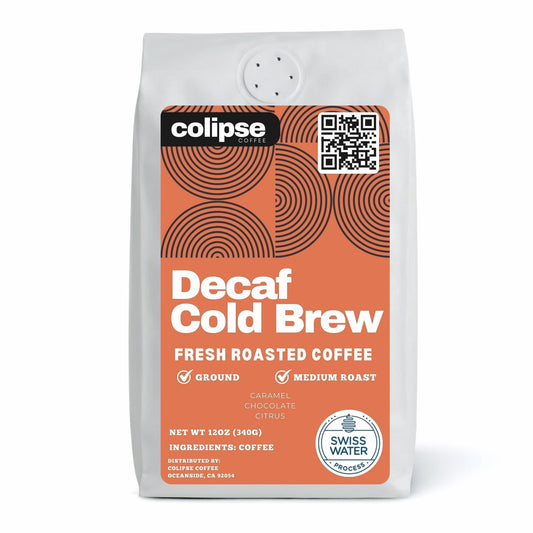
Find the best decaf coffee for high blood pressure by choosing water-process or Swiss Water decaf, which removes caffeine without harsh solvents. Buy it at Whole Foods, Trader Joe’s, Costco, Target, or local roasters. Online stores like Colipse Coffee offers fresher roast dates, wider low-acid options, and subscriptions, while stores win for same-day pickup and easy returns.
Why Choose Colipse Coffee's Decaf Selection?
Choose Colipse Decaf Coffee and taste what chemical-free decaffeination actually delivers. Brew it your way. Colipse decaf performs across every method you love — espresso, drip, pour-over, French press, cold brew, moka pot, and AeroPress. Order your Colipse decaf today and experience the full spectrum of specialty coffee — any time of day.